“The whole of this state of society, civil and military, must strike anyone as eminently Asiatic; much of it specifically Indian. Such it undoubtedly is. . . these evidences were but the attendant tokens of an Indian colonization with its corresponding religion and language. . . the whole of Greece, from the era of the supposed godships of Poseidon and Zeus, down to the close of the Trojan war was Indian in language, sentiment and religion, as well as the arts of peace and war.” – Edward G Pococke.
In his book “India in Greece” published in 1852 Edward G Pococke asserts that Greece was originally a colony of India, just as India itself was once a colony of the British. He claims that the tightly knitted region of India which includes the Attacs, the Buhatians, the Kori – Indus, the Tettas and the Megar Talao of Sind, have been reproduced in Greece as the equally tightly knit regions known as Megari, Corinthians, Boeotia, Tettiges and Atticas. According to Mr Pococke the Hindus are the pilgrim fathers of Greece.
In India just below the conjunction of the Kabul and Indu rivers is the region of Attock. Originally named Attac its a strategic location where one can travel by way of the river Indus to the Arabian sea or cross over to Afghanistan by way of the Kabul. It was a commercial and military route traversed by Alexander the Great and the British Raj. The merchants of Attac sent their goods through the people of Tatta, the Tettaikes who were expert sea faring mariners. With Mekram on the west they would go up to the river of Attac, down to the Persian gulf and the gulf of Kutch and Combay.
In Greece we have the famous region of Attica, encompassing the city of Athens, the capital of Greece. Its history is interwoven with Athens going back over 2000 years to at least the Hellenic period. According to Heredotus, Attica was overrun by grasshoppers, this became the symbol for Attica and its people were known as the Tettiges, the Greek name for grasshopper. Is it a coincidence that the Attacs of India did their overseas trade through the people of Tetta, the sea faring Tettaikes, and the Atticas of Greece were known as tettiges, a sea faring warrior tribe.
On the land of Behut, also known as the Jhelum river which flows from Kashmir to the Punjab and Baramula, lived the Bahutians, their name derived from Bahu, the arm of Brahma from which sprang the Ksatriya caste. In Greece there is the region of Locri, home to the ancient Greeks known as the Boeotians. Situated to the northwest of Attica, the people of this region were famed for their military vigor. They were squarely built figures, with huge mounts, extremely warlike. Genetically they are the same as the Bahutians, the strong arm of Brahma. East of Boeotia is the large island of euboia. The settlers are known as the Eu – Bahuyas. Eu is the Greek equivalent of the Sanskrit su which means “good”. So the name Eubahuyas simply means the good Boeotians.
So lets take a look at some of the similarities Mr Pococke is presenting. Attac in India – Attica in Greece – The sea faring people of Tetta, the Tettraikes of Attac India – The sea faring Tettiges of Attica Greece – The Bahutians of India – The Boeotians of Greece – The Bahutians, Attacs and Tettas of India all connected through a trade route by way of the Indus river – The Tettiges, Boeotians and Atticas of Greece all grouped together connected through islands.
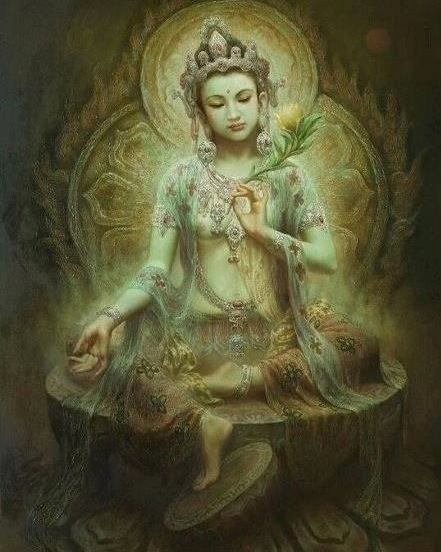
” The Sanskrit language, whatever be its antiquity, is of a wonderful structure; more perfect than the Greek, more copious than the Latin and more exquisitely refined than either: yet bearing to both of them a stronger affinity, both in the roots of verbs, and in the forms of grammar, than could possibly have been produced by accident; so strong indeed, that no philologer could examine them all without believing them to have sprung from some common source which perhaps no longer exists…” Sir William Jones.
On the Rann of Kach region of Gujarati, the river Kori runs as a creek into the mouth of the Indus river, which travels through Attac, Bahutia and Tetta. Its seven miles wide and the people alongside the river are known as the Kori Indus. In Greece one of its most famous regions, mentioned in the New Testament is Corinthia. Formely it was known as Korinthus, Kori is the Kori in Kori Indus and inthus is the Indus, the letters th and D being phonetically interchangeable.
Seven miles north of Karachi is Magar Talao, famous for its hot springs which the natives claim to cure all diseases and infamous for its legions of crocodiles which inhabit the area. Like the Tettas, Attacs, Bahutians and Kori Indus it is located upon the ancient trade route along the Indus river. In Greece surrounded by Attac, Boeotia and Corinthia lies the region of Megaris an ancient city which can be traced back in time to at least 3000 years. The name Megaris was brought to Greece by the sea faring Mariners of Megar Talao.
And finally Logurh, a province of considerable size, it lies in Afghanistan just south of Kabul. Over the years its name has changed to Lagar, a river with various feeders and intersects this region which, being well watered, fertile and farmed with much care, is the most productive part of this country. Its a very ancient province, connected to the same trade route as the Attacs, Tettas and Bahutians, by way of its river which connects with the Kabul and flows into the indus. Alexander the Great and the early British Raj both traversed this path. In Greece we have the three districts, Epicnamedian Locris, Opuntian Locris and Ozolian Locris, each are part of the ancient Locris and home of the great warriors the Locrians who fought in the ancient war of Troy. Their name has come from this river Logurh in Afghanistan. The Ozolian in Ozolia Locris comes from the Oxus people and its river Oxus, now known as the Amu Darya. Like all the others it is connected to the same trade route through the rivers Kabul and Indus which all run down to the Kori Indus at the mouth of the Indus river.
So once again to recap – Attac in India – Attica in Greece – The sea faring tettaikes in Attac India – The sea faring Tettaiges in Attica Greece – The Bahutians of India – The Boeotians of Greece – The Kori Indus of India – The Corinthus of Greece – The Magar Talao of India – The Magaris of Greece – The Logurh of Afghanistan – The Locris of Greece – All these regions of India were intimately connected as a trade route to other countries – All the regions of Greece have been intimately connected for thousands of years as sea going mariners.

The map above is India where the Indus river runs through the Sind province and up into the Himalayas. The regions which form the trade route along the Indus river are numbered 1. The Kori creek 2. The land of Tatta 3. Attock 4. Magar Toalo 5. Behut, the land of the Bahutians and 6. The Afghanistan province of Loguhr.
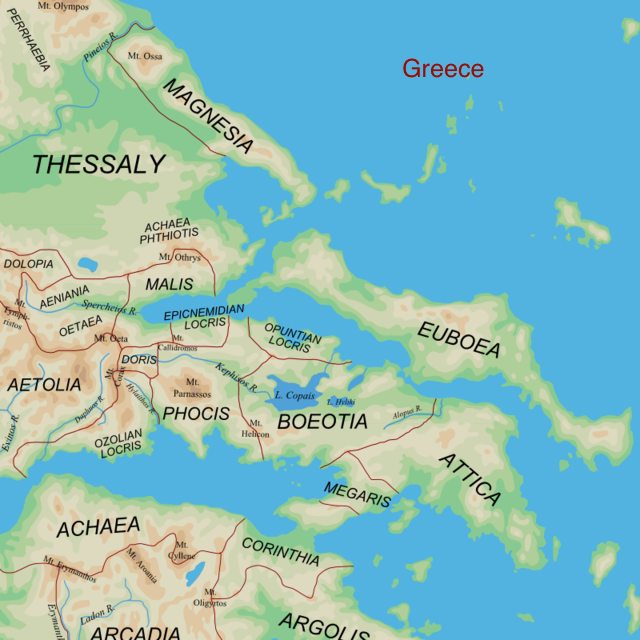
As we can see from the map above, all these regions that we find grouped together in India, the Attaca, the Kori Indus, the Magars, the Bahutians and the Lagurhs are all grouped together in the country we know as Greece.
” In India, our religions will never at any time take root; the ancient wisdom of the human race will not be supplanted by the events in Galilee. On the contrary, Indian wisdom flows back to Europe, and will produce a fundamental change in our knowledge and thought. ” Arthur Schopenhauer.
” It is only within this century (the 1800’s) that England and America discovered that their nursery tales were old German and Scandinavian stories; and now it appears that they came from India, and are therefore the property of all the nations. ” Ralph Waldo Emerson.
” Land of religions, cradle of human race, birthplace of human speech, grandmother of legend, great grandmother of tradition. The land that all men desire to see and having seen once even by a glimpse, would not give that glimpse for the shows of the rest of the globe combined. ” Mark Twain
We are eager to hear your thoughts so please scroll down to the bottom and “submit comment” Thankyou.