Gauranga.org Articles

Gauranga.org Articles, General News

Socrates and Hector Dawkins

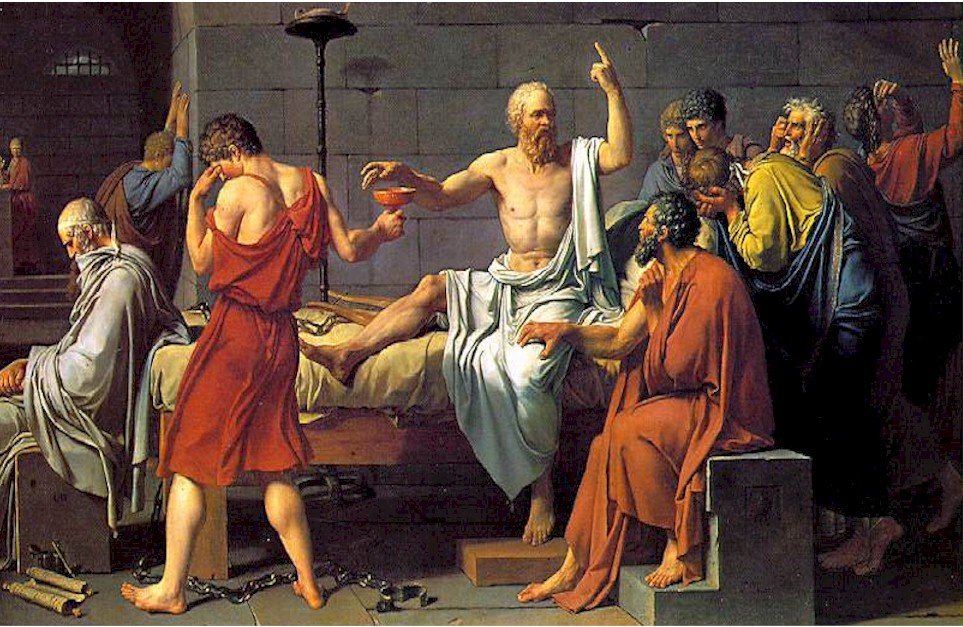
  On The Definition of Science: A debate between Socrates and Hector Dawkins By James Hoskins   As a fairly reasonable person, I am repeatedly astonished by dogmatists who voice their opinions on amoral issues so loudly and adamantly, that they seem to imply a moral indignation toward anyone who would disagree, thereby encouraging the … Read more

Bhagavad Gita, Gauranga.org Articles, General News

The Cherry On The Cake


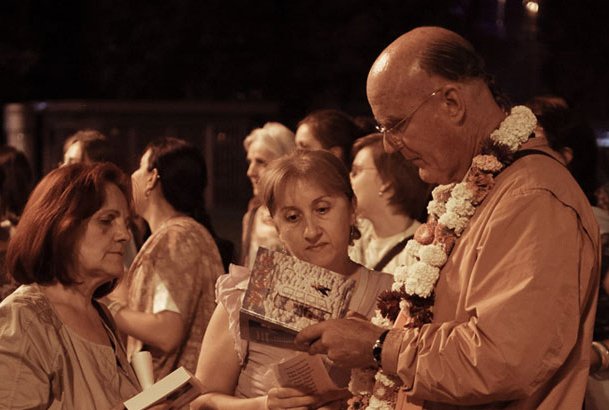
I sat in my room in the temple building in Skopje, the capital of Macedonia, taking prasadam and listening to a bhajan by devotees downstairs in the temple itself. “That’s such a sweet bhajan” I said to a devotee “and it’s been going on for hours.” “Yes, Maharaja,” he said. “The Macedonians are very musically inclined, we love to sing and play musical instruments. We even have our own form of a tamboura here, a four-stringed instrument. Devotees use it often in bhajans.” Two hours later I left for the square in the city center with a group of twenty devotees. The square, renovated in recent years, is a popular place for the people of Skopje to spend warm summer evenings sitting, talking, and eating in nearby restaurants. As we approached the square I saw the huge statue of Alexander the Great.
“That statue is quite impressive,” I said to a devotee.
“Yes,” he replied. “Alexander the Great was from Macedonia. He left here to conquer the world, he built a huge empire, but it was too much to manage, and he never returned home.” I had been reading TKG’s Diary by Tamal Krsna Goswami while traveling, and just that morning I had come across a passage where Goswami quoted Srila Prabhupada on the same point: “Srila Prabhupada actually said that Alexander the Great could not maintain his large empire,” I said.
Prabhupada said : Suppose I conquer Bombay and then Karachi, but in the meantime Bombay is lost? That was Alexander the Great : too much expansion.’ “Srila Prabhupada said it was for this reason that he was emphasizing the importance of book selling over opening temples. He said, ‘Don’t make me Alexander the Great in my lifetime. People have recognized I am great. Don’t make me small.” The devotee, pointed to the other side of the square. “There’s also another important landmark over there,” he said. “It’s the home of Mother Teresa, who was born here in 1910 and left at seventeen to go to India as a missionary. The house is now a national memorial.”

Gauranga.org Articles, Newsflash

Newsflash 54

&nbsp At the airport on the day of Srila Prabhupada’s first visit to the UK, he boldly replied to reporters who asked, &nbsp “What have you come to teach us?” &nbsp “I have come to teach you what you have forgotten—God.” &nbsp “These boys and girls who are following me, they are very elevated. They … Read more

Gauranga.org Articles, Lectures

Prabhupada Padma

  Prabhupada Padma by Rasa     Following is the translation of ‘Prabhupada Padma’, in glorification of Srila Bhaktisiddhanta Sarasvati Gosvami Maharaja Prabhupada, composed by H.H. Srila Sridhar Gosvami Maharaja. &nbsp 1) His lotus feet are served in devotion by multitudes of high, virtuous souls; he is the establisher of the religion of the age … Read more

Bhagavad Gita, Gauranga.org Articles, Video

The Form of God – Fact or Fancy?

&nbsp

Is God a formless force, or the supreme eternal person?

&nbsp
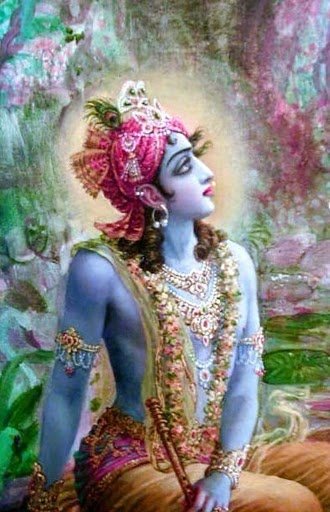
Often people become puzzled when they see a picture of Lord Krishna. Usually they have been exposed only to Western religious philosophy, which hints that God is a person—the eternal father of every living entity—but gives scanty information about His form. For this reason many people think God is formless or void. But by using a little logic we can easily understand that if God is our eternal father, He must have form. Our fathers are persons with form. And if we count back thousands of generations we will find that our forefathers were also persons with form. Why should we think that the original, primeval, absolute father (God) is not a person, or that He is a formless person? The word person implies form; a formless person does not exist.
&nbsp
Nevertheless, many people think that since God is spirit, He must be formless. They consider spirit to be some transparent, ethereal “force.” However, beyond this hazy conception of spirit, which is not upheld in any of the great scriptures of the world, is the scientific explanation of spirit—or, as modern science calls it, antimatter—found in the Vedic literature.
&nbsp

&nbsp

Gauranga.org Articles, Video

The Art of Kirtan

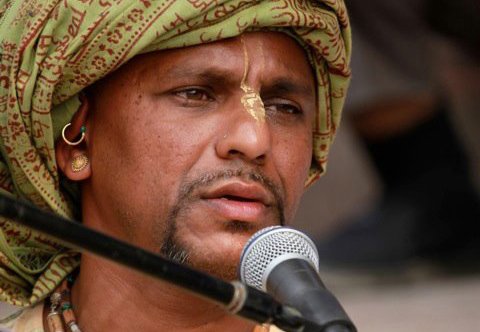
&nbsp &nbsp “The Art of Kirtan” is a kirtan workshop at Melbourne’s Mahaprabhu Mandir on 28 October 2012 with Madhava Dasa and Radhika Devi Dasi. It tells the human story behind Madhava and his kirtans ranging from his childhood to his training with Aindra Prabhu in Vrindavan and his travelling to introduce kirtan all over … Read more

Gauranga.org Articles, General News

Shiva-Ratri

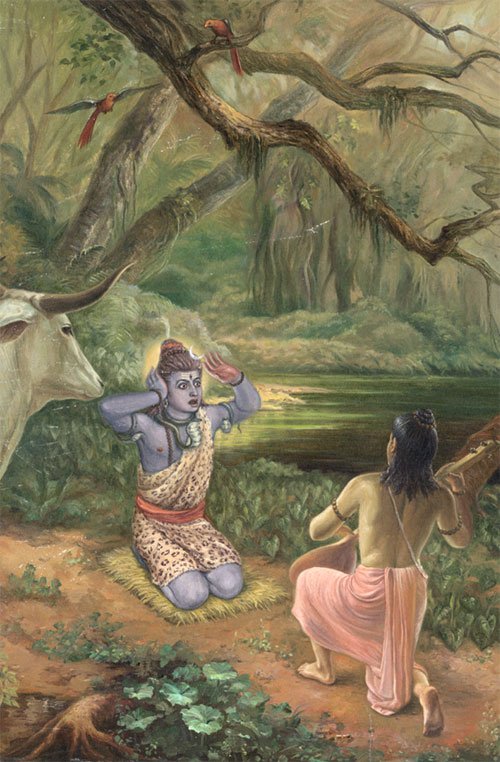
&nbsp Lord Shivas’s Highest Benediction &nbsp &nbsp Once, the great sage Narada Muni traveled to the abode of Lord Siva and began to glorify him, saying, “You are very near and dear to the Supreme Lord Krsna. Not only that, you are Krsna’s manifestation; you are non-different from Him. You can give liberation and also … Read more

Bhagavad Gita, Gauranga.org Articles, General News

The Test of the Genuine Guru


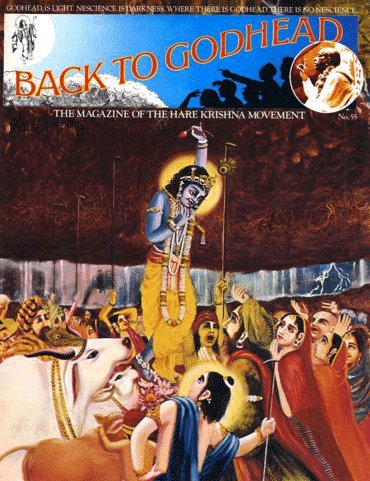
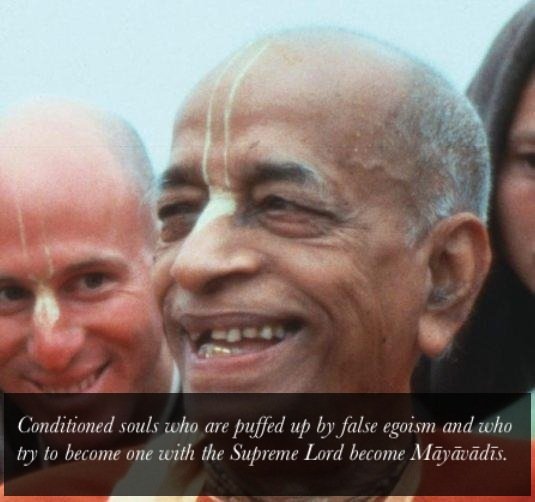
An Interview in London with His Divine Grace A.C. Bhaktivedanta Swami Prabhupada, from Back To Godhead, Vol. I, No. 55, 1973.

Prabhupada: Are you under the impression that spiritual life means voluntarily accepting poverty? Do you think like that?
Interviewer: Well, I don’t, but I only thought that

Interview To Srila Prabhupada

 
Prabhupada: A poverty-stricken man may be most materialistic, and a wealthy man may be very spiritual. Spiritual life does not depend on one’s living in poverty or wealth. Spiritual life is different. Consider Arjuna, for instance. Arjuna was a member of the royal family, and in Bhagavad-gita Sri Krsna said: evam parampara praptam imam rajarsayo viduh: “This supreme science was received through the chain of disciplic succession, and the saintly kings understood it in that way.” (Bg. 4.2) In the past all kings who were saintly understood this spiritual life. Therefore spiritual life does not depend on one’s material condition. A person may be a king or a pauper whatever his material condition may be, he can still understand spiritual life. Generally people do not know what spiritual life is, and they unnecessarily criticize us because they have no knowledge of spiritual life. If I asked you whether you. know what spiritual life is, how would you answer?

Bhagavad Gita, Gauranga.org Articles, General News

Everybody, Somebody, Anybody and Nobody

&nbsp
There were four friends named Everybody, Somebody, Anybody and Nobody.
&nbsp
One day there was a service to be done, and Everybody was sure that Somebody would do it.
&nbsp
Anybody could have done it but Nobody did it.
&nbsp
Somebody got angry about that because it was Everybody’s job.
&nbsp
Everybody thought Anybody could do it, but Nobody realized that Everybody wouldn’t do it.
&nbsp
It ended up that Everybody blamed Somebody when Nobody did what Anybody could have done.
&nbsp

&nbsp

Bhagavad Gita, Gauranga.org Articles, Newsflash

Newsflash 53

&nbsp “Another meaning of guna is rope; it is to be understood that the conditioned soul is tightly tied by the ropes of illusion. A man bound by the hands and feet cannot free himself–he must be helped by a person who is unbound. Because the bound cannot help the bound, the rescuer must be … Read more

Scroll to Top