‘Rta’ is a word from the language of Sanskrit which goes back in time some 6000 years to the compilation of the Rig Veda where it is mentioned some 400 times hence ‘rta’ is a word which holds much importance within the Vedas and the ancient language of Sanskrit.
Within the pages of the Rig Veda it describes how ‘rta’ whose meaning is ‘righteousness’, and ‘satya’ whose meaning is ‘truth’ are born from the fires of tapasya ( austerity ) it describes how Surya, the god of the Sun, travels upon the two wheels of rta and satya, and it describes how the god of fire, Agni, is said to spread heaven and earth by rta.
‘Rta’ was especially upheld amongst the ksatriya race, the warriors who would only fight warriors, where no warrior unarmed could be attacked, nor could one fleeing the battlefield be killed and these principles were spread far and wide as seen within the Zoroastrian lands of Iran where ‘rta’ is expressed as ‘arta’ and used as a prefix for many names of its great warriors.

‘Rta’ whose meaning is ‘righteousness’ is seen in the Zoroastrian language of Iran as ‘arta’ whose meaning is ‘righteousness’ and this can be seen within ‘Artaphernes’ a great warrior and brother of Darius and his name whose meaning is one who possesses the qualities ( varna ) of righteousness ( rta ) also possesses ‘varna’ a word from the language of Sanskrit whose meaning is ‘quality’.
‘Rta’ whose meaning is ‘righteousness’ and ‘truth’ which becomes ‘arta’ whose meaning is ‘righteousness’ and ‘truth’ is seen within ‘Artembares’ the name of a Persian ruler of Western Lycia whose meaning is one who bears ( bares ) the truth ( arta ) and this also possesses ‘bhara’ a word from the language of Sanskrit whose meaning is to ‘bear’ to ‘carry’.
‘Rta’ whose meaning is ‘truth’ which becomes ‘arta’ whose meaning is ‘truth’ is seen within ‘Artakama’ who was a Persian noble woman and daughter of Artabazus and her name whose meaning is one who desires ( kama ) the truth ( arta ) also possesses ‘kama’ a word from the language of Sanskrit whose meaning is ‘desire’.
‘Rta’ whose meaning is ‘righteousness’ can be seen within ‘Artabaz’ a commander of the war chariots of Cyrus the great and although his name is vague we find the ‘baz’ maybe the ‘bhas’ of Sanskrit whose meaning is ‘splendour’ ‘majesty’ ‘glory’ hence his name may mean one who spreads the glory ( bhas ) of righteousness ( rta ).
The daughter of Cyrus the great and the wife of Darius the great was ‘Artastuna’ and her name whose meaning is one who is the pillar ( stuna ) of truth ( arta ) also possesses ‘sthuna’ a word from the ancient language of Sanskrit whose meaning is ‘pillar’ and ‘post’.
‘Artasthuna’ also possessed a daughter whose name was ‘Artasusri’ and her name whose meaning is one who is rich ( susri ) in truth ( arta ) also possesses ‘susri’ a word from the language of Sanskrit whose meaning is one who is very rich and beautiful.
‘Rta’ whose meaning is ‘righteousness’ which becomes ‘arta’ whose meaning is ‘righteousness’ can be seen in ‘Artaxerxes’ the grandson of Cyrus the great who ruled the Achaemenid empire for some 40 years from 465 B.C. which is quite a feat as in those days Kings had a short lifespan and his name means one whose rule ( xerxes ) is truth ( arta ).
‘Xerxes’ whose meaning is to ‘rule’ which forms ‘Artaxerxes’ is from ‘ksa’ and ‘ksi’ words from the language of Sanskrit whose meanings are to ‘rule’ and as ‘ksi’ and ‘ksa’ meaning to ‘rule’ becomes the Iranian ‘xsa’ meaning to ‘rule’ it then becomes ‘xsasaca’ meaning to ‘rule’ which then corrupts further into this ‘xerxes’ whose meaning is to ‘rule’.
We should also keep in mind that Cyrus the great possesses a name which has been anglicised by the West as his real name is ‘Kurus’ a name which is very much a part of Vedic and Sanskrit nomenclature and the great king ‘Darius’ is also from the language of Sanskrit as in ‘dharya’ meaning ‘holding’ his name meaning ‘one who holds the good’.
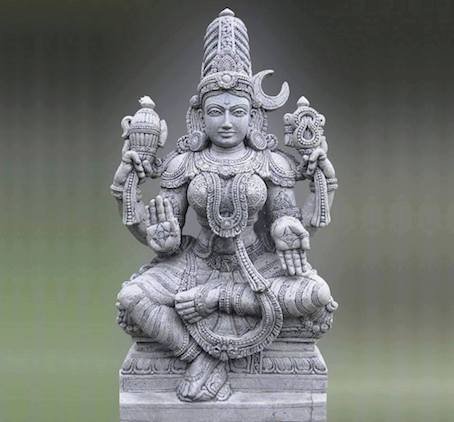
‘Rta’ is also seen within ‘Artemis’ the goddess of the hunt, the goddess of the wilderness, the goddess of the Moon and having vowed a life of celibacy she is known as the virgin goddess. One of the most venerated of the gods of Greece she is the daughter of Zeus and twin sister of Apollo, her temple was once one of the seven wonders of the ancient world.
‘Artemis’ whose name is said to be vague may bear the meaning of the righteous ( arta ) moon ( mis ) and the luminous ( arta ) moon ( mis ) a reflection of her role as the virgin goddess and the ‘mis’ which may mean ‘moon’ may be related to ‘mas’ a word from the language of Sanskrit whose meaning is ‘moon’ as seen in the Sanskrit ‘candramas’ whose meaning is the bright ( candra ) moon ( mas ).
The mother of ‘Artemis’ is the goddess of the harvest, the goddess of the grains and the goddess of fertility known as ‘Demeter’ a name which is formed from ‘matr’ a word from the language of Sanskrit whose meaning is ‘mother’ and ‘ga’ and ‘gau’ words from the language of Sanskrit whose meanings are ‘cow’ and ‘earth’ which seems to have become the Doric ‘da’ whose meaning is ‘earth’ hence her name means mother ( matr ) earth ( da ).

‘Rta’ whose meaning is ‘righteousness’ which becomes the Avesta ‘arta’ whose meaning is ‘righteousness’ also becomes the Persian ‘ard’ whose meaning is ‘righteousness’ as seen within ‘Ardakan’ a province of Iran whose meaning is the holy ( ard ) land ( kan ).
‘Rta’ whose meaning is ‘righteousness’ is seen within ‘Ardalan’ a province of Kurdistan its name meaning the sacred ( ard ) land ( lan ) and its also seen within ‘Ardestan’ a country of Iran whose name also possesses ‘sthana’ a word from Sanskrit meaning ‘land’ as in the land ( stan ) of righteousness ( ard ).
‘Rta’ whose meaning is ‘righteousness’ is seen within ‘Ardabil’ a province of Iran which goes back at least 2500 years and its name meaning the sacred ( ard ) city ( bil ) also possesses the Sanskrit ‘visah’ meaning ‘city’ and as we consider the Sanskrit source for these Iranian names and place names we should also keep in mind that the name Cyrus ( kurus ) is from Sanskrit, the name Darius is from Sanskrit and the name of ‘Iran’ is from ‘Arya’ which is a purely Sanskrit word whose meaning is those who are ‘noble’.

”The Bactrian ( Persian ) is so greatly related to the old Indian language and in particular that of the Vedas that without exageration it can be called a dialect thereof”. Professor H. Kern – About the word Zarathustra.
“Slowly and gradually it dawned upon them that the language of the Gatha and Zendavesta has very great kinship with the Sanskrta language. When the grammar of Panini, Katyayana and Patanjali was applied then the Gathas and Zendavesta came to be understood by the Westerners. The lesson from this amazing fact is clear that once the Iranians of the Gatha and Zendavesta and the Indo-Aryans of the Vedas formed one single race, speaking language akin to Samskrta.” – A Comparative Study of Religions By Y. Masih
“I am Darius the great King, King of Kings, King of many countries and many people, the King of this expansive land. The son of Archaemenid, the son of a Persian, Aryan from the Aryan race”.