The following are quotes by Srila Prabhupada on Vivekananda.
Just like Vivekananda has manufactured: daridra-nārāyaṇa. How Nārāyaṇa can be daridra?
The sinful man, he will say, “Oh, Kṛṣṇa is also man. I am also man. Why I am not God? He is simply God? No, I am also. I am God. You are God, you are God, every God.” Just like Vivekananda said, “Why you are searching after God? Don’t you see so many gods are loitering in the street?” You see. This is his God realization. This is his God realization. And he became a big man: “Oh, he is seeing everyone God.” This foolishness, this rascaldom, is going on all over the world.
•••
I have read one speech, Chicago speech by late Vivekananda Swami. He’s talking to the audience that “You work so hard, why you give credit to God?” You see? If you find his Chicago speech, you’ll see.
•••
Therefore sometimes we find that although they say it is mithyā, jagan mithyā, and take sannyāsa and for some days they remain meditation or aloof from any worldly affairs, but later on, when they do not find Brahman, they come again to this māyā to open hospitals, schools, as sannyāsī.
Just like in our country there are many. The beginning we see that… Vivekananda Swami, he took sannyāsa and meditation. Later on, after his touring in the Western countries, he came to India to open hospitals, schools, like that. But if the world is false, then why you are coming to open school and hospitals? Because they could not get…
And some other sannyāsī also, he is now taking part in politics. If jagat is mithyā, why you are taking part in politics? These question are there. Actually they do not know what is what, what is the adjustment. But our philosophy, Vaiṣṇava philosophy, we don’t say that “There is no God” or “This world is created by accident or combination of matter.” We don’t say that.
We say that God is the creator. Not we say, but the Vedānta says. The essence of Vedic knowledge, Vedānta philosophy, Vyāsadeva, he says that janmādy asya yataḥ: [SB 1.1.1] “The source of janma or creation, the maintenance and annihilation, the source…” Where it is? Yato vā imāni bhūtāni jāyante. This is Vedic information. That is Brahman, wherefrom everything is coming. The same thing is said in the Vedānta-sūtra. Janmādy asya yataḥ [SB 1.1.1]. Athāto brahma jijñāsā.
•••
You cannot become self-realized without the help of, without the mercy of Baladeva. Now, our Vivekananda Swami, he interpreted that “Unless you become stout and strong like the bulls and the buffalo, you cannot realize self.” He interpreted like that. So he engaged people to make gymnastics, exercise. “You become very stout and strong, eat meat, and…” This is going on. This philosophy is going on.
Bala-hīnena… “Unless you become as strong as a tiger, you cannot realize yourself.” This interpretation is going on. Bala-hīnena labhyaḥ. Therefore they are… Always they put this argument, that “Our countrymen is suffering. There is no food. First of all we must give them food, make them strong, stout. Then we shall talk about Kṛṣṇa consciousness.” Do they not say like that?
•••
In the Bhagavad-gītā we don’t find anywhere a single line that “You raise funds for,” I mean to say, “giving relief to the poor” or “to the suffering.” Is there any instruction in Bhagavad-gītā? You have read. Can you find out? But these people, they have become more learned than Kṛṣṇa. In our country, Vivekananda: daridra-nārāyaṇa-sevā. The whole Ramakrishna Mission is collecting funds only on this rascal plea.
•••
Sometimes a so-called incarnations are, they are declaring that “I am God.” Then one should test whether actually God. That is intelligence. Simply by declaring, if somebody declares falsely that “I am God…” Just like this Ramakrishna. He declared that “I am the same Kṛṣṇa and Rāma.” Is it not? You do not know?
Guest (2): I haven’t got a basic idea, but he was taken in the world…
Prabhupāda: That is the… How he has taken? How he was taken? There is no, in the śāstras, any confirmation. He was accepted by Vivekananda. He said that “I am the same Rāma and Kṛṣṇa,” and Vivekananda accepted. So anyone can say like that; anyone can accept. But that is the test? What is the proof? You can say that “I am the same Rāma and Kṛṣṇa,” but because you say, I’ll have to accept? So that is nonintelligent.
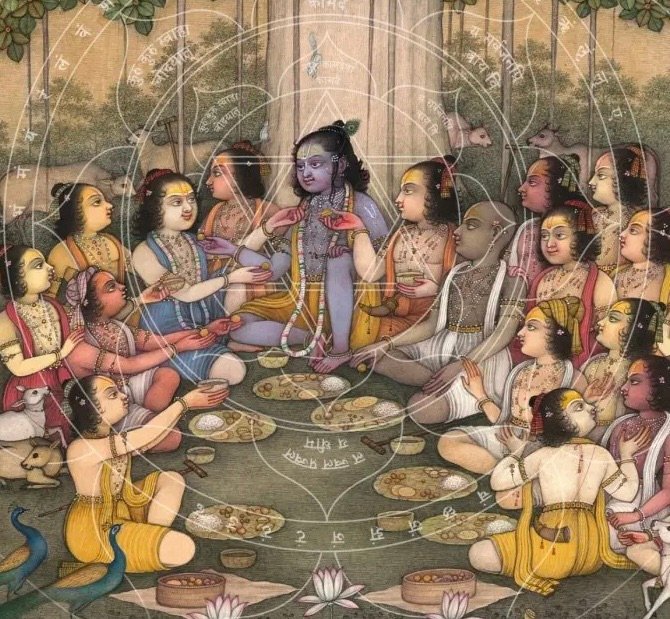
So the Brahmā and Indra, they are not fools. When they saw that “A boy is in Vṛndāvana, and He is accepted as the Supreme Lord, and He is doing something like God. Let us test,” so Brahmā took away all His cows and calves and playmates.
•••
So he should be charged more, this student. And one who comes as blank slate… They have accepted Kṛṣṇa consciousness because they are blank slates. And in India they think that they have learned so many things. Yes. They have learned from Radhakrishnan, they have learned from Aurobindo, they have learned from Vivekananda, the Ramakrishna, this, that, so many nonsense-except Kṛṣṇa. They have learned everything from so many nonsense except Kṛṣṇa.
•••
There are many mental speculator, just like Aurobindo Ghosh. So he speculated. He understood that there are activities even after liberation, but he could not understand Kṛṣṇa, so hard it is. Others, the so-called sannyāsīs, just like Ramatirtha or Vivekananda, they could not approach even, in the modern age. And the Aurobindo, he approached up to the Brahman liberation, but he could not approach to the understanding of the Supreme Personality of Godhead.
•••
The, the sahajiyās, they also think like that, that by sex one can rise to that platform of merging into the effulgence of Brahman. Even Vivekananda was talking that “This Vaiṣṇava religion is a religion of sex.” They have been so much misrepresented. By sexual indulgence, one can become one with the Supreme. This is their theory, very dangerous theory.
•••
In this connection I’ll, oh, I may declare herewith that some of you, if you read the Chicago speech by Vivekananda… That was, he was the first man. He came from India to preach this Hindu philosophy in 1893. Some of you know. So he has got his speech, Chicago speech of Vedānta. You’ll see, it is simply rascaldom. Simply. By his speech it is written… If you can secure, you bring it, you’ll see how rascaldom he was. You’ll be surprised.
Even a clergyman from this country, oh, he was surprised. “Oh, you come from India and you are decrying God in this way? Oh, I’m surprised.” He was…, simply he has decried God: “Oh, why do you care for God? Throw Him, God. You are God.” In this way, he has spoken.
•••
He’ll always think, “I am God.” Just like… Who was speaking? Yes, yes, Nikhilananda. He has discussed in that Vivekananda’s speech that man is God. But somebody asks, “Why he has become dog?” “Oh,” he says, “I do not know.” So God says, “I do not know.” He’s such a God. And that is clearly written. Have you got that book? God, God, God…
The followers of Śaṅkarācārya say that “I am God. There is no other God. Every one of us God.” Then why you have become dog? “Oh, that I do not know.” Is that God’s, I mean to say, answer? If I ask if you are God, if I answer you, “Why you are dog?” you say, “I do not know,” so are you God? God does not know? Well, God description is there in Parāśara-sūtra that He is full of all knowledge. That is God. And God says, “I do not know”? How he is…? What kind of God he is?
•••
Vivekananda came here to preach Hindu religion. Before that he had no idea of philanthropic work. And when he came back to India, “Oh, this is your religion. Oh, so many Indians they are suffering. So many Indians they have no shelter. Oh, give them shelter. Give them hospital.” Now he became… And collected fund. Vivekananda started new religion, daridra-nārāyaṇa. Daridra-nārāyaṇa means the poor, poverty-stricken Bowery men, they should be served, not Kṛṣṇa. That is their mission.
The Ramakrishna Mission means to serve daridra-nārāyaṇa. “Nārāyaṇa has become daridra.” He has invented some words, “Nārāyaṇa has become daridra.” You see Viṣṇu. Viṣṇu, Nārāyaṇa, so opulent. According to Vivekananda, He has become poor now. So these things are going on. These things are nothing. They are symptoms of falling down, nothing more. They are symptoms of falling down. They cannot do a bit of benefit to the humanity. The laws of nature is so strict that if you have to suffer, nobody can check you.
•••
Oh, Caitanya Mahāprabhu regrets that such a great difference between God and the living entity, and Śaṅkarācārya has described that we are God? That means he has diminished the opulence and value of God.
Suppose if I call a third-class man “His Majesty,” then what is that? This word, “His Majesty,” is misused. Just like they are saying, daridra-nārāyaṇa. The foolish Ramakrishna mission has, I mean to say, discovered a word, daridra-nārāyaṇa, “poor Nārāyaṇa.”
Nārāyaṇa, who is the husband of many thousands of goddess of fortune, He has become poor. Just see the theory. You can ask Nikhilananda what is the meaning of daridra-nārāyaṇa. They have discovered. Vivekananda has discovered. Nārāyaṇa has become poor. When you ask him, “Why do you call daridra-nārāyaṇa?” they will explain like that, “Because Nārāyaṇa is there, therefore Nārāyaṇa has become daridra.” Just see.
Suppose a rich man comes into this store, so he becomes poor just like us. Because he has kindly come here in this store, so because we are all poor men, he’ll also becomes poor man? This is the reason.
But these are all nonsense. Nārāyaṇa never becomes poor. The poor, poverty-stricken man, all these things are for the jīvas, the living entities. Nārāyaṇa is never poor. Nārāyaṇa is never under ignorance. Nārāyaṇa never becomes dog. We become dog. We become cat. You should always…
Caitanya Mahāprabhu therefore rejects, that “This sort of philosophy propounded by Śaṅkara is a great mistake because he has minimized the value of the Supreme Lord. By making a dog a god, he has insulted God.
Therefore this Māyāvāda philosophy is the most offensive activities of the living being.” So you should be very, very careful, very careful. Hena jīva-tattva lañā likhi’ para-tattva. “And I have just studied the ordinary living entities, and I am speaking of the Absolute Truth? Oh, this is the greatest nonsensical activity.” Ācchanna karila śreṣṭha īśvara-mahattva: “By this the glorification of the Lord has been diminished, and therefore it is a great offense.”
•••
The Māyāvādī sannyāsīs address amongst themselves: namo nārāyaṇa. “Namo nārāyaṇa” means every one of them has become a Nārāyaṇa. This is their philosophy. And from this namo nārāyaṇa principle, Vivekananda Swami has manufactured the word “daridra-nārāyaṇa.” So Nārāyaṇa has become very cheap thing for them. Everyone has become Nārāyaṇa; everyone has become God.
Just like the rascal God is now in the hospital. God is under operation. (laughter) A “guruji” God. So they have no shame even that “If I am God, I cannot cure my bodily pains, what kind of God I am?” But these rascals will proclaim that they are God, and there is set of rascals, they will accept, “Oh, here is God.” Vivekananda also said that “Why you are finding out God? Don’t you see, so many gods are loitering in the street?” So God has become a funny thing for them. No. We do not accept such God. Our God is different.
•••
So these rascals, foolish, they are thinking material nature is for our enjoyment. That is the materialistic view. There is a flower. “Nature has produced this flower for me. Everything is for me.”
Just like in the Bible, Jesus Christ says the animals are given under the protection of man. So they are thinking, “They are given to us for eating. God has given.”
Suppose I entrust Brahmānanda Swami that you give him protection, but if you think, “He’s in my protection. I can eat him…” How intelligent! How magnanimous! They are giving protection by eating.
And the Māyāvādī philosophers support them, that when they eat animals, Vivekananda’s philosophy, “So what is there? I am Brahman, he is Brahman, so we become united.” What is that?
And I ask him, “Why don’t you go to the tiger Brahman?” Because they are thinking that he is Brahman, the goat is Brahman, so when the man Brahman eats the goat Brahman, they unite. So why don’t you unite with the tiger Brahman? This is rascaldom. They are all rascals.
Anyone who has no trace of Kṛṣṇa consciousness, he is a rascal. There is our challenge. (indistinct) He may be great philosopher, religionist-he is a rascal, degree only. Cent percent rascal, or maybe ninety percent rascal, or seventy percent rascal, but they’re all rascals.
The same example: stool, this side and that side. Because the upside of stool is dried up, you cannot say, “It is very nice.” And they’re all stool. Anyone who is not Kṛṣṇa conscious, who does not know the science of Kṛṣṇa, he’s useless.
•••
God is an idea. So his philosophy is that you create by imagination something as God. Actually there is no God. Just like Māyāvādīs, they say, “God is imperson. God is dead.” Like that. And you can create a God. Just like Vivekananda, that is their theory. Therefore they create Ramakrishna as God.
•••
Anything nonsense idea, that is not God. God has created you. You cannot create God. And they are creating God. Just like Vivekananda mission, yata mata tata patha. As many opinion you have got, you can have your religious way. Yata mata, this is their mission, yata mata tata patha, “Whatever you are thinking, all right.”
Ramakrishna, he wanted to realize God from any way. And later on he wanted to realize God by the Mohammedans’ way and he asked the proprietor of the temple to allow him to take meat, cow’s flesh. So when he asked, the proprietor said, “Please go out. Get out.” Now don’t real…, I don’t want the (indistinct).
This philosophy also you can realize God in any way, yata mata. Now he wanted to realize in the Mohammedan’s way, therefore he thought it wise that he must eat cow’s flesh. These things are there.
•••
There are two sides. There are two kinds of people are going. The same man, he is giving charity for feeding poor man or giving relief to the distressed man, but at the same time he’s encouraging animal-killing. So what is the ethics? What is the ethical law in these two contradictory activities?
One side… Just like our Vivekananda. He is advocating daridra-nārāyaṇa sevā, “Feed the poor,” but feed the poor with mother Kālī’s prasāda, where poor goats are killed. Just like, another, one side feeding the poor, another side killing the poor goat. So what is the ethic? What is the ethical law in this connection?
Just like people open hospitals, and the doctor prescribes, “Give this man,” what it is called,” (Hindi), ox blood, or chicken juice.” So what is this ethic? And they’re supporting that “Here is chicken juice.” Just because animal has no soul, so they can be killed. This is another theory. So why the animal has no soul? So imperfect knowledge. So on the basis of imperfect knowledge this ethic or this humanitarian, what is the value? We do not give any value to all this understanding. Where is the ethics?
If you protect the human life by giving him something by killing-there are so many medicines, but the killing is very prominent-then next point should be that if you say that the human life is important, so nonimportant animal-killing can be supported to save the important. Then the question will be, “Why it is important? Why consider the human life is important and the animal life is not important?” These are the questions of ethical law. Where are these discussions on the ethical laws?
•••
That is another nonsense. That is another nonsense. Truth is true. Not that… I cannot fashion truth. This statement is nonsense. Truth is true. Fire is hot. That is true. If I imagine that fire is cold, is that philosophy? He does not prove. He does not know what is truth. One who does not know what is truth, therefore they imagine or manufacture truth.
Just like Vivekananda, yata mata, Ramakrishna, yata mata tata patha, “You can manufacture your truth.” That is going on. That is going on. The hippies, they are manufacturing their truth. So truth cannot be manufactured. Truth is truth. That is called absolute truth. Not relative truth, absolute truth.
You can manufacture relative truth, but absolute truth is one: tattvaṁ phalaṁ yena (?), just like Bhāgavata says. Who is meditated upon? Who is worshiped? The Absolute Truth. So they have no knowledge of the absolute.
•••
Therefore the Māyāvādī philosophers, the impersonalists, because they are not willing to serve Kṛṣṇa, they stop willing. They again fall down. Vivekananda comes and opens hospitals. Just like your Christian missionaries. Yes. This is there. Willing, you cannot stop. You have to will badly or goodly, or godly. So better try to will godly, then badly will automatically… This is our process. You don’t stop willing. Yes, we will-or Kṛṣṇa’s service.
•••
So the faith is not so easy thing. Kṛṣṇa is, from the battlefield of Kurukṣetra, five thousand years ago, the Bhagavad-gītā is being studied by so many scholars like Gandhi, Dr. Radhakrishnan, Vivekananda, Aurobindo. Where is that faith, sarva-dharmān parityajya mām [Bg. 18.66]?
They are taking advantage of Bhagavad-gītā and pleading their own philosophy. And where is that faith? They never taught that “You surrender unto Kṛṣṇa.” Perhaps this is the first time. Of course, the Vaiṣṇava teaching us like that, but we, this Kṛṣṇa consciousness movement, we are teaching this, that “You catch up Kṛṣṇa.”
They have no faith and they are teaching Bhagavad-gītā. This is their only… They have no faith in Kṛṣṇa and they are preaching about Kṛṣṇa, they are studying Bhagavad-gītā. This nonsense is going on.
They have no faith. They do not believe in the words of Kṛṣṇa. Faithless preachers, rascals, and these yogis, swamis, they are preaching Bhagavad-gītā. So this is a nice point, that faith is the beginning, but they have no faith. Then where is the beginning?
•••
Mat-sthāni sarva-bhūtāni: [Bg. 9.4] “Everything is in Me, but I am not there.” Just like the body of a dog. The body is on the soul; the platform is the soul. Otherwise there is no meaning of the body. So the body of the dog is depending on the soul of the body. But that does not mean the dog’s body is God. Nāhaṁ teṣu avasthitaḥ. Find out this verse, mat-sthāni sarva-bhūtāni nāhaṁ teṣu avasthitaḥ. They are taking just as Vivekananda, they, the body of a daridra, poor man, is resting on God, Nārāyaṇa…
•••
But he is taking the body as Nārāyaṇa. That is his knowledge, imperfect. He is saying daridra-nārāyaṇa. God has become daridra. And he is taking the consideration of the body; therefore he is thinking God has become daridra. The body of a daridra, poor man, is depending on Nārāyaṇa, but he is taking the body as Nārāyaṇa. He is such a fool, and he is going on.