
Gauranga
Sundara dāsa
A life of spiritual searching, devotional service, Bhagavad-gītā teaching and more than fifty years dedicated to the path of Kṛṣṇa consciousness.
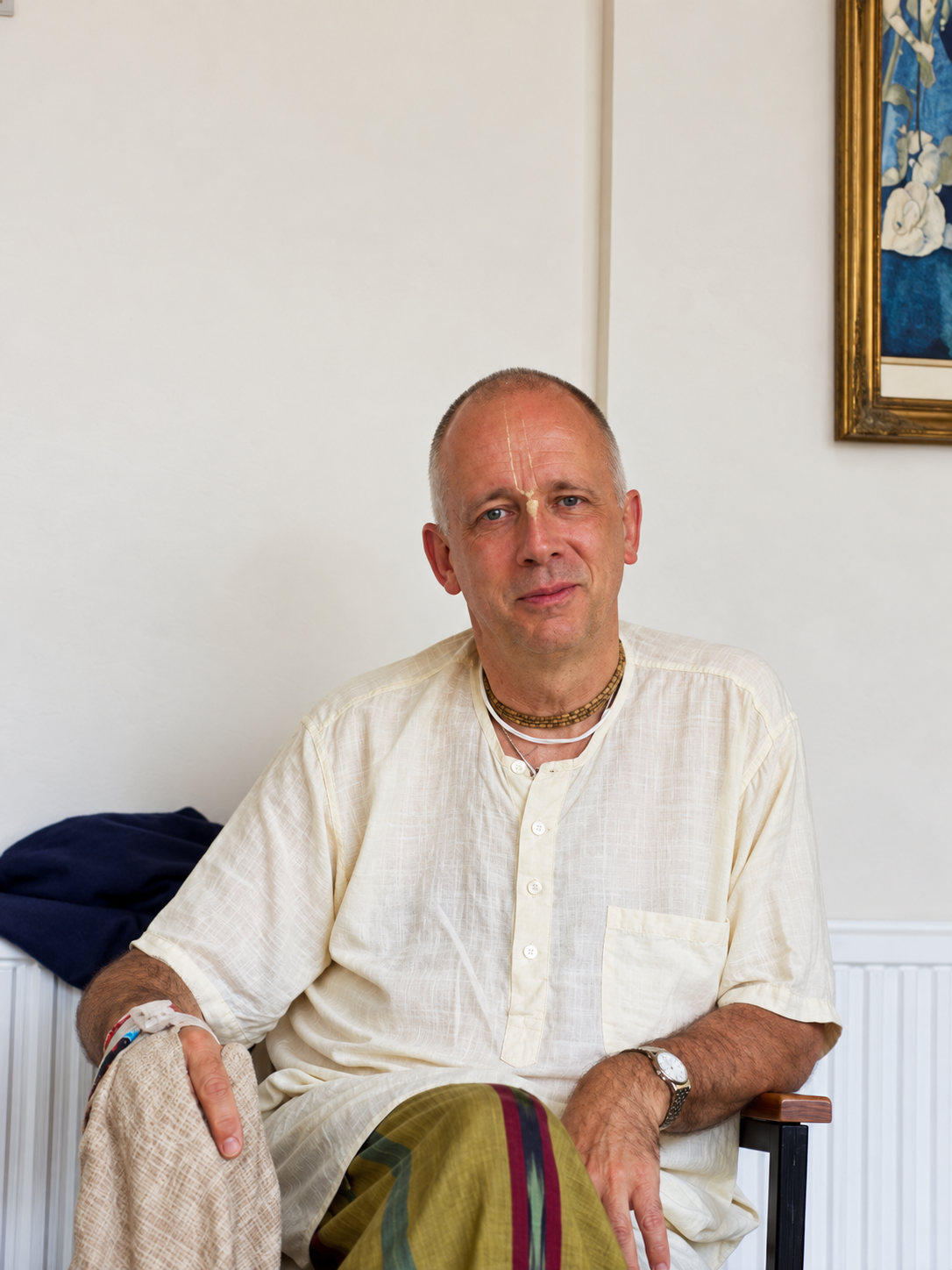
Gauranga Sundara dāsa has been practising and teaching Kṛṣṇa consciousness for more than fifty years. His spiritual journey has taken him from a Catholic childhood in rural Germany, through years of searching and meditation, to a lifelong commitment to the teachings of Śrīla Prabhupāda and the path of bhakti.

Searching for God
Gauranga Sundara was born on 6 July 1950 in Fürth im Odenwald, a small village in Hessen, Germany.
He grew up in a Catholic family and served as an altar boy. As a child he was strongly attracted to the ritual and beauty of worship, carefully keeping colourful pictures of saints in his church songbook as treasures.
For a period he even wanted to become a priest.
Yet alongside faith came questions. He believed strongly in God but wanted a spiritual understanding in which sincere questions were welcome.
That search would eventually carry him far beyond the religious world of his childhood.
The Search Deepens
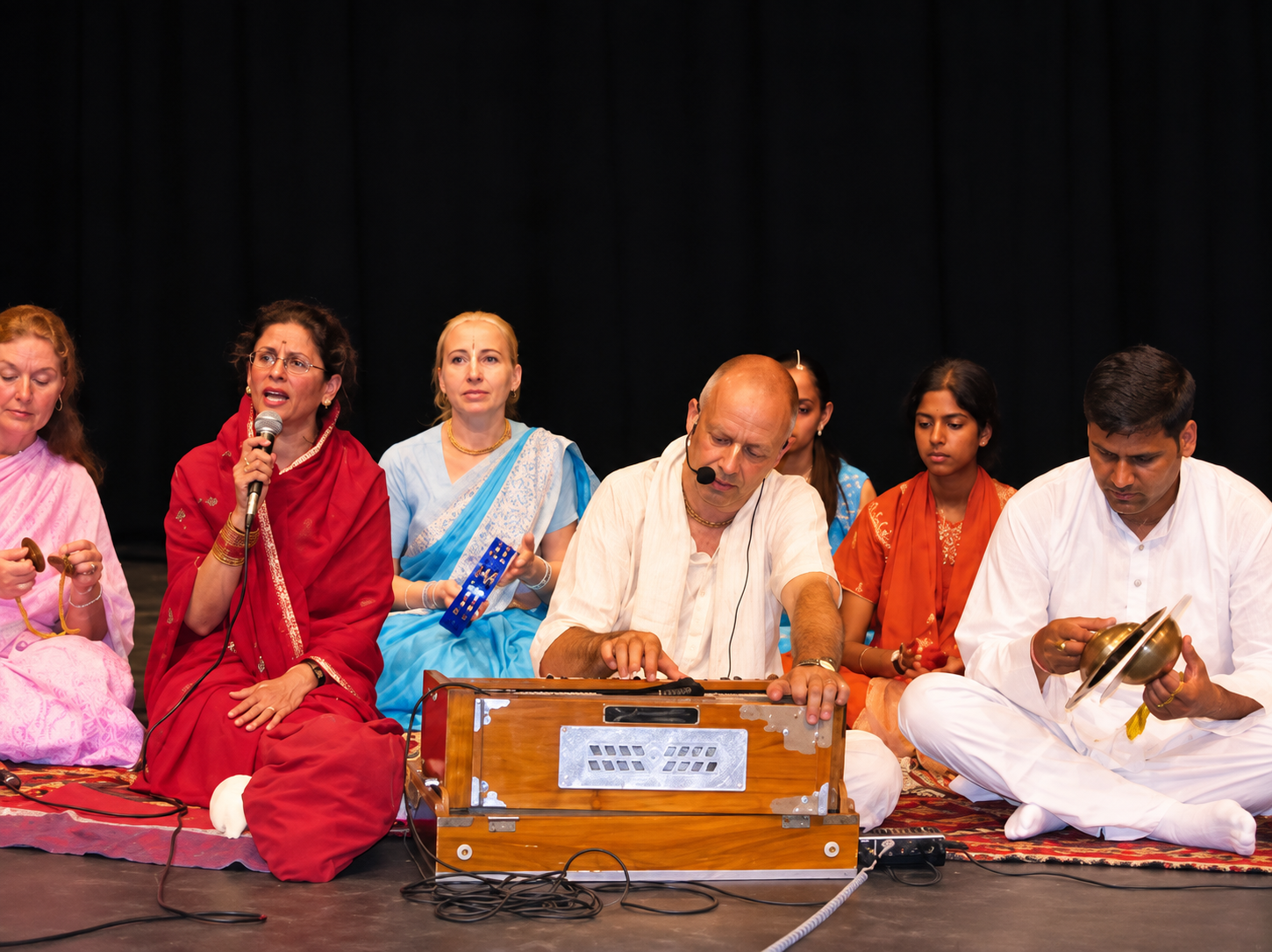
Music accompanied Gauranga Sundara from his earliest years.
He received classical piano training and studied clarinet and flute at the Akademie für Tonkunst in Darmstadt.
Over the years he explored saxophone, drums, sitar, bongos and various flutes. Later, the harmonium became particularly important in his devotional life.
As a young man he trained as a biological laboratory technician at Merck in Darmstadt.
The work itself never fully suited him, but his long daily train journeys gave him time to read, reflect and explore deeper questions about consciousness.
In time he became convinced that temporary altered experiences were not enough. Genuine transformation required a genuine spiritual path.

The Sound Came First
Gauranga Sundara first encountered Hare Kṛṣṇa devotees in Darmstadt. At first their appearance and street chanting felt unfamiliar, and he kept his distance.
Then a young devotee persuaded him to take a small seven-inch German Hare Kṛṣṇa record in exchange for a donation.
One side carried the Hare Kṛṣṇa mahā-mantra; the other, prayers to Tulasī Devī.
He took it home and played it.
Then he played it again.
And again.
For a period he listened to those two sides almost continuously. Long before he understood the philosophy, the sound of bhakti had already entered his life.
Before the philosophy came the sound.
Many years later he found the original recording again, bringing him back to that first moment when bhakti reached him through sound before words.
The Red
Bhagavad-gītā
During years of intensive spiritual exploration, Gauranga Sundara studied Buddhism and Zen, psychology, the Tibetan Book of the Dead, Rudolf Steiner, theosophy, anthroposophy and other approaches to consciousness.
Then a young woman later known to him as Revatī gave him a beautiful German hardbound copy of Bhagavad-gītā As It Is.
It had a bright red cover.
After years of searching through many teachings, reading Śrīla Prabhupāda’s presentation felt to him like drinking water directly from the source.
Here was clarity. Kṛṣṇa was a person. The soul had an eternal identity. Life had a purpose.
Meeting Śrīla Prabhupāda
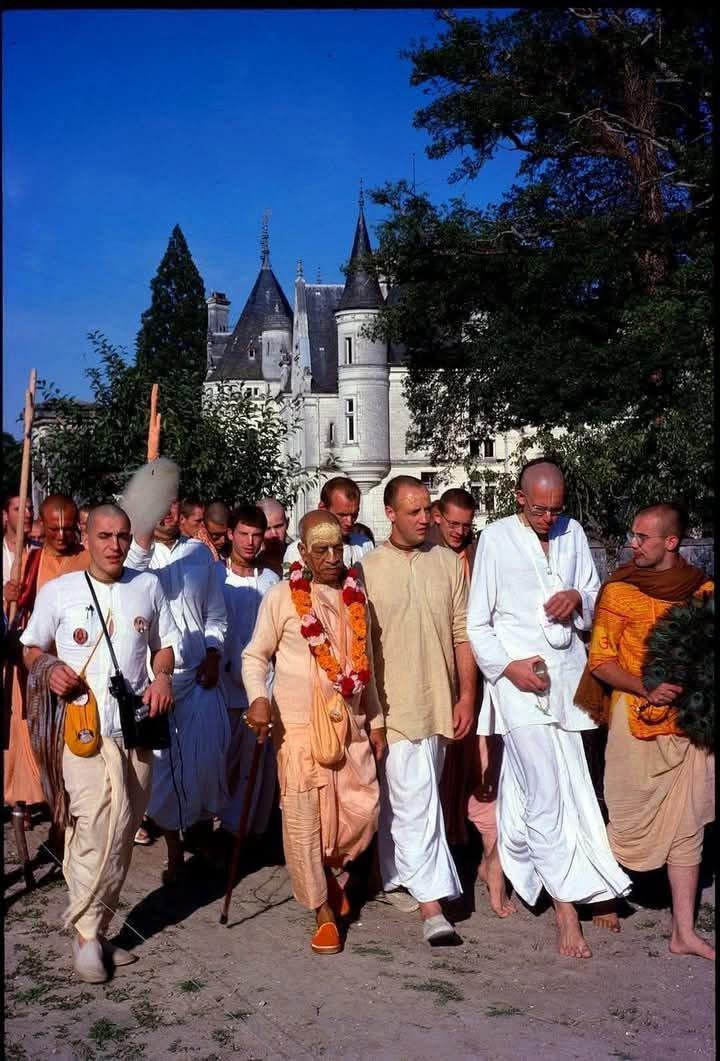
From the time he encountered Bhagavad-gītā As It Is, Gauranga Sundara accepted His Divine Grace A. C. Bhaktivedanta Swami Prabhupāda as his eternal spiritual master.
He first met Śrīla Prabhupāda through his words.
In 1976 he met him personally at New Māyāpur in France.
His relationship with Śrīla Prabhupāda has remained at the centre of his spiritual life and teaching ever since.
“A small act of devotion, offered with sincerity, can become a doorway into a lifetime of service.”The first flowers for Śrīmatī Rādhārāṇī
The First Flowers
At Schloss Rettershof, one of Gauranga Sundara’s earliest devotional services was to gather lilies of the valley for Śrīmatī Rādhārāṇī.
He collected the flowers and brought them to the temple as a simple offering. The following morning, when he came before Śrī Śrī Rādhā-Madana-Mohana, he saw the bouquet in Rādhārāṇī’s hands.
He has often reflected that perhaps Rādhārāṇī, in Her mercy, accepted that small offering and opened the door of devotional service.
The Journey Through Bhakti
Śrīla Prabhupāda
He personally met Śrīla Prabhupāda at New Māyāpur in France.
Journey to India
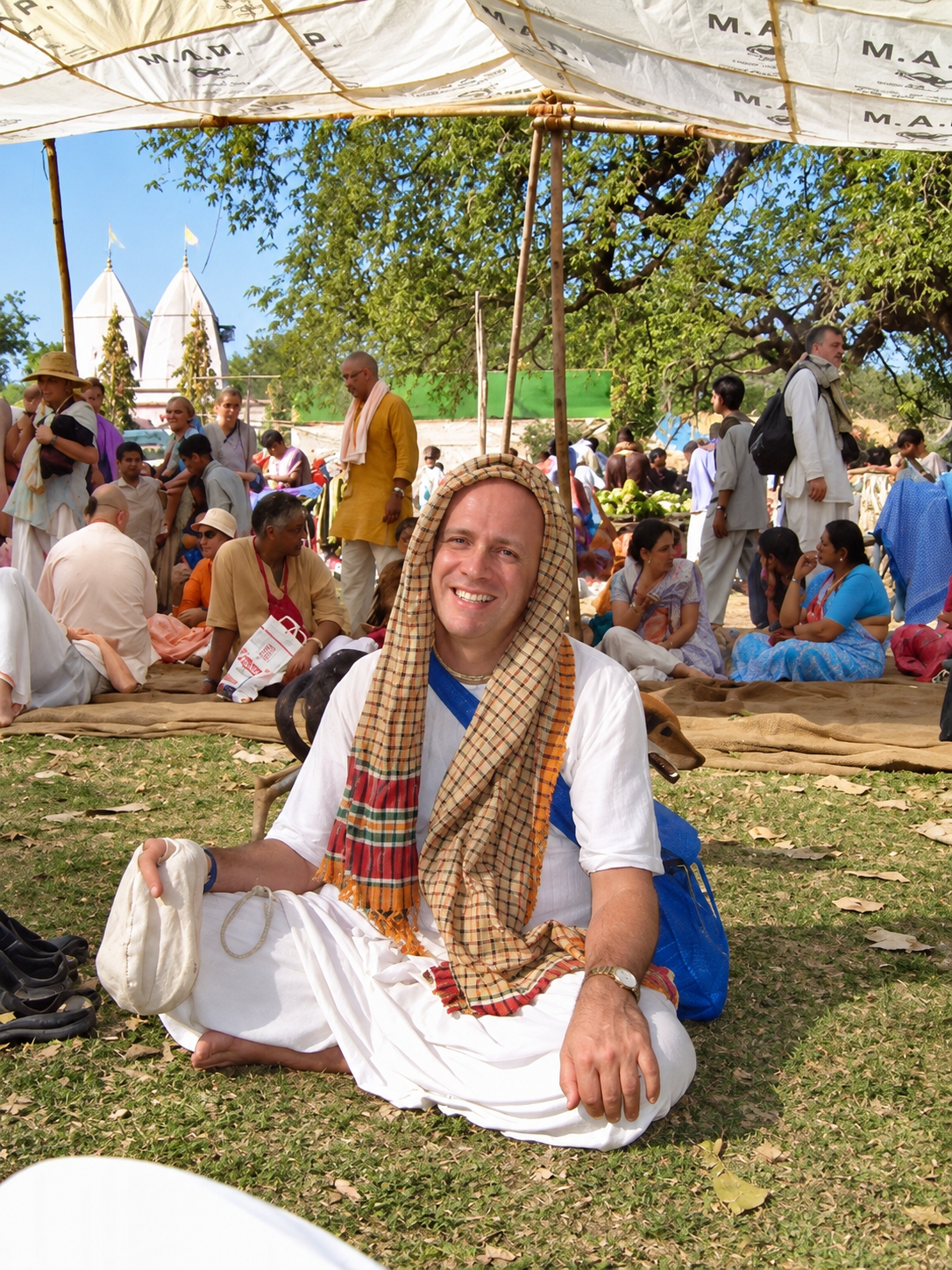
He travelled with German devotees to Māyāpur, Vṛndāvana and Bombay.
New Māyāpur
Eight formative years of gurukula service, Deity worship, music, community life and spiritual teaching.
Initiation
Gauranga Sundara received dīkṣā in 1982 and brahminical initiation the following year.
Leicester
He moved from France to Leicester.
Hare Krishna Centre
The Hare Krishna Centre Leicester was established.
The Years at New Māyāpur
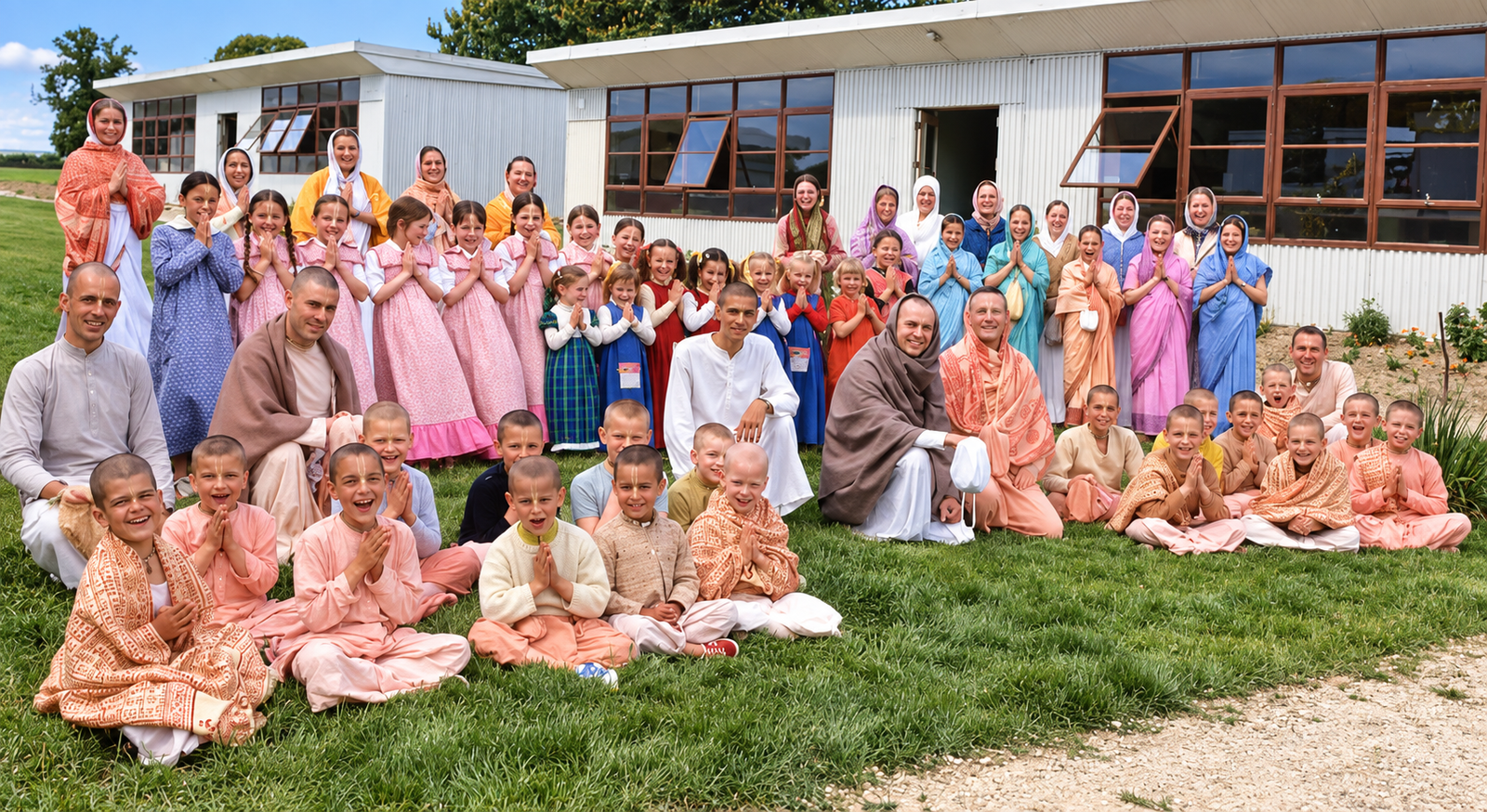
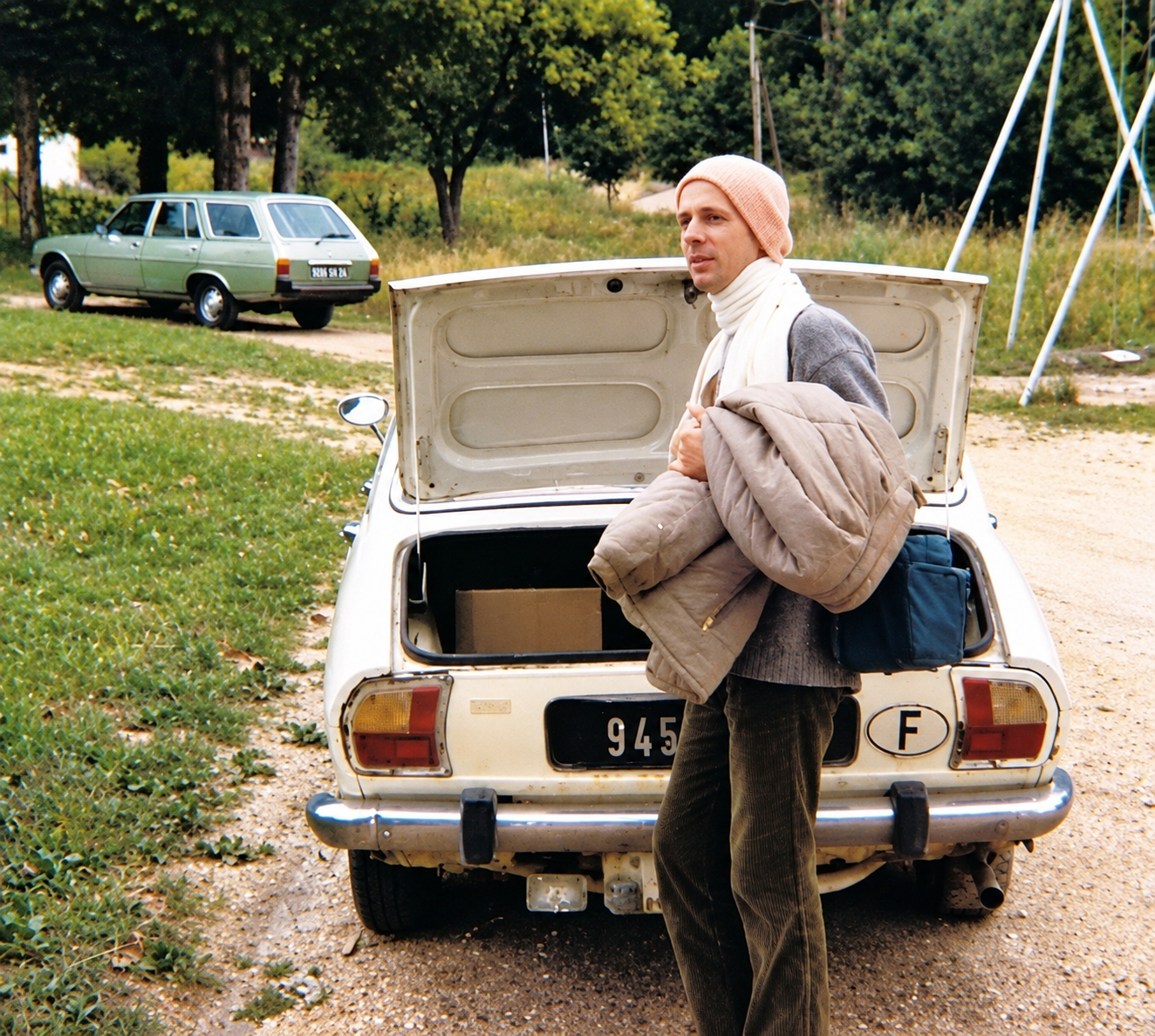
In 1980 Gauranga Sundara moved to New Māyāpur, the large Kṛṣṇa conscious community in France.
He remained there for eight years. His principal service was with the gurukula.
He lived with a group of boys in his care and tried to make their āśrama not only disciplined but beautiful, comfortable and happy.
Music also became part of the children’s devotional education. He taught Vaiṣṇava songs and played harmonium while the children responded.
During these years he developed a particularly deep attachment to the worship of Giri Govardhana, serving as pūjārī.
It was also at New Māyāpur that Indradyumna Swami asked him to give his first morning class. A service that began quietly there would eventually become one of the central activities of his life.
Building a Community Around Bhagavad-gītā
In 1988 Gauranga Sundara moved from France to Leicester.
He later studied music, German and religious studies at Leicester University and undertook teacher training.
Teaching in adult education helped him develop confidence as a public speaker.
Around 1995 he became temple president of ISKCON Leicester, serving for approximately ten years.
Regular Bhagavad-gītā teaching became increasingly central during this period.
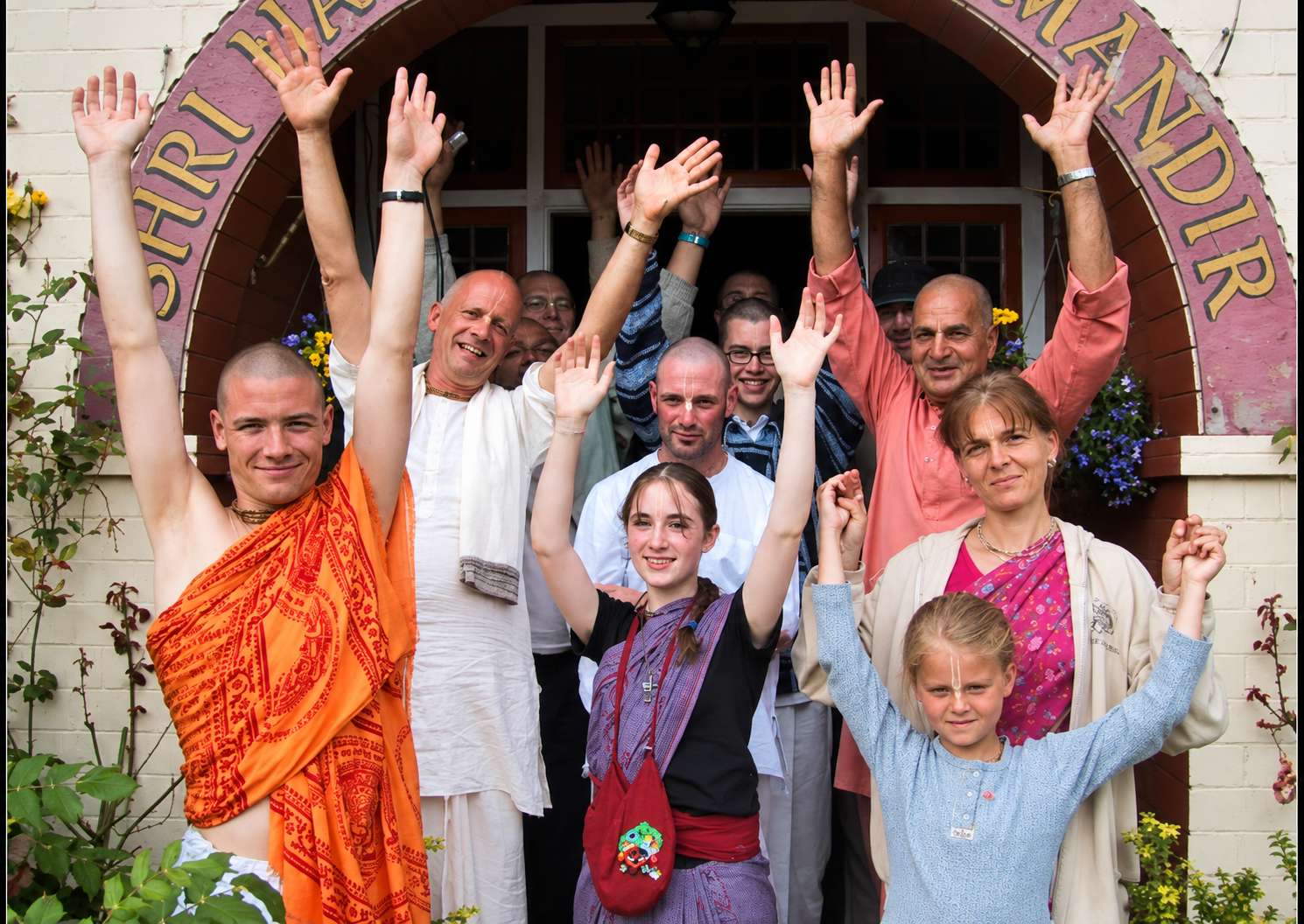
In 2005 the Hare Krishna Centre Leicester was established, and Gaura-Nitāi Deities were installed.
Weekly classes, kīrtana, devotional gatherings, prasādam and personal spiritual guidance became part of the life of the Centre.
Creativity in the Service of Kṛṣṇa
At the age of seventy, Gauranga Sundara returned to university.
At De Montfort University in Leicester he studied for a BA in Communication Arts.
His studies included media, writing, photography and videography.
For someone whose childhood interests had included drawing, craft, storytelling and music, the course brought many creative strands together again.
This time those skills could be used in the service of communicating Kṛṣṇa consciousness.
Making Bhakti Practical, Personal and Living
On Gaura Pūrṇimā 2026, through the League of Devotees, H.H. Bhaktisvarupa Damodara Swami asked Gauranga Sundara to accept the responsibility of serving as a dīkṣā-guru.
For him, this responsibility remains inseparable from his relationship with Śrīla Prabhupāda.
His aim is not to draw disciples towards himself, but to help them deepen their relationship with Kṛṣṇa, take shelter of the process of bhakti and become securely connected with Śrīla Prabhupāda and the disciplic succession.
Knowledge
Spiritual knowledge should not remain theoretical. It should transform our understanding of ourselves and our relationship with Kṛṣṇa.
Remembrance
Knowledge should gradually become remembrance of Kṛṣṇa in everyday life.
Service
Duty gradually deepens into voluntary and affectionate devotional service.
Love for Kṛṣṇa
Spiritual practice ultimately finds fulfilment in awakening genuine love and devotion for Kṛṣṇa.
A Pilgrimage of the Heart
Gauranga Sundara is presently writing his first book, A Pilgrimage of the Heart, based on sixty-one Bhagavad-gītā lectures delivered over approximately one year.
The book traces the inner journey from spiritual restlessness and searching towards remembrance, service, surrender and love for Kṛṣṇa.
In many ways, that theme reflects his own life.
Towards Kṛṣṇa.
The Catholic altar boy who once wanted to become a priest. The young musician captivated by a Hare Kṛṣṇa record. The seeker looking for expanded consciousness. The devotee gathering lilies of the valley for Rādhārāṇī.
The gurukula teacher playing harmonium with children. The temple president giving Bhagavad-gītā classes. And the teacher still trying, more than fifty years later, to understand more deeply what it means to love and serve Kṛṣṇa.
The outward circumstances have changed many times. The direction has remained the same.