
His Divine Grace
A. C. Bhaktivedanta
Swami Prabhupāda
for Krishna Consciousness
The spiritual teacher who carried the timeless teachings of Kṛṣṇa consciousness from India to the world and established a global movement dedicated to bhakti, the holy name and the teachings of Bhagavad-gītā.
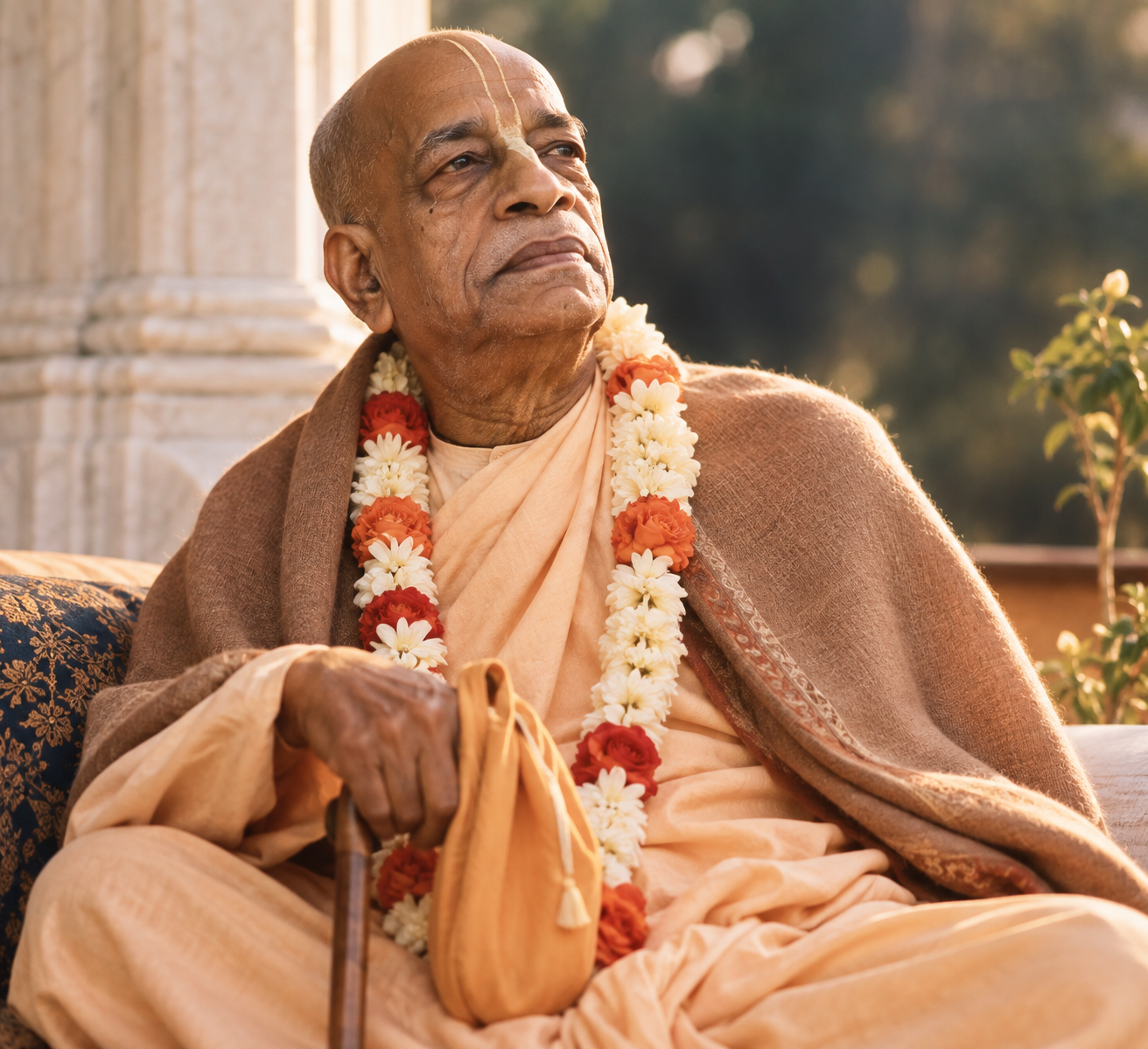
There are teachers who explain a spiritual tradition, and there are teachers whose lives change the course of that tradition. Śrīla Prabhupāda carried the ancient teachings of Kṛṣṇa consciousness across oceans, languages and cultures, making the path of bhakti accessible throughout the world.
From Abhay Charan
to Śrīla Prabhupāda
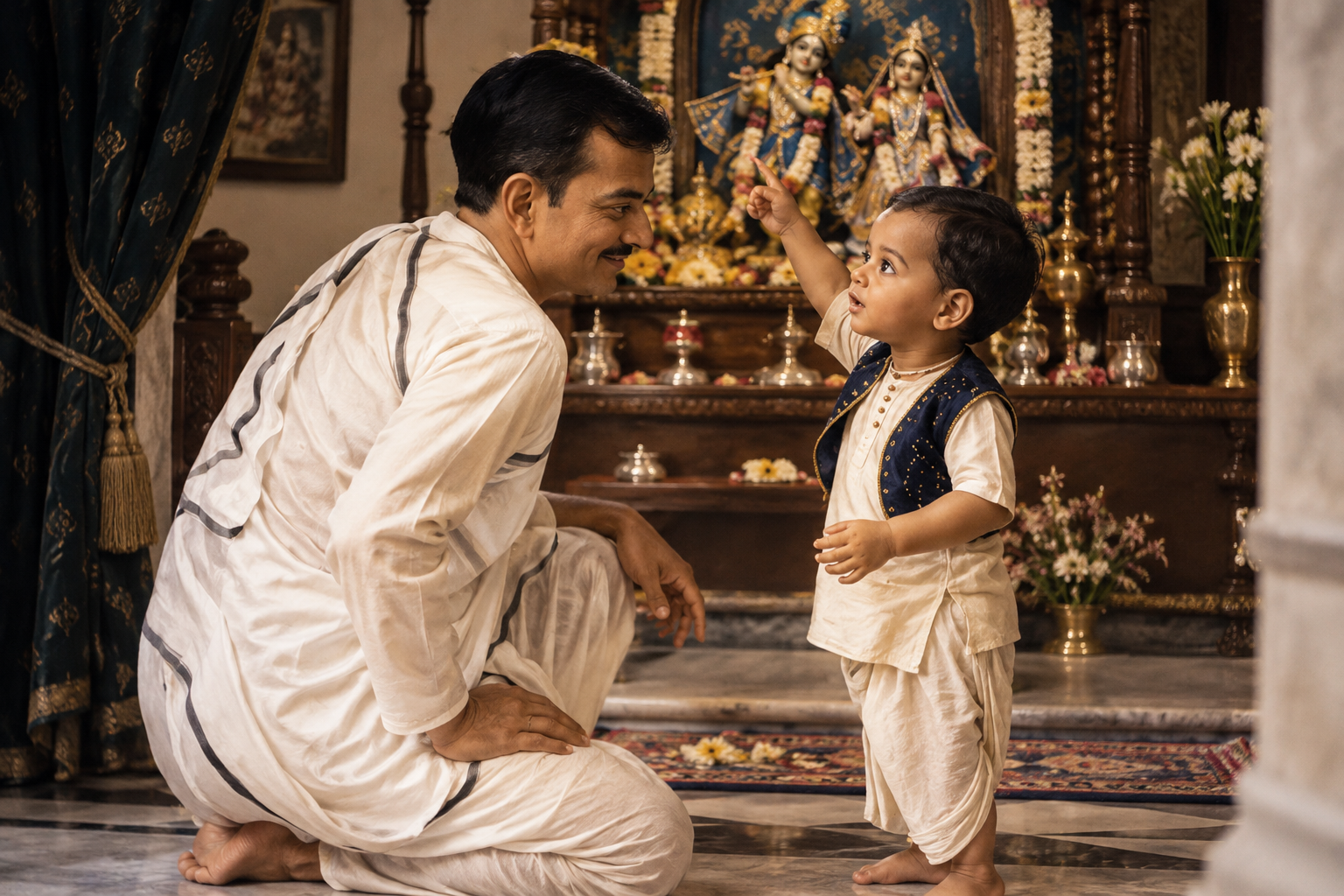
Śrīla Prabhupāda was born Abhay Charan De on 1 September 1896 in Calcutta, India, into a Vaiṣṇava family. From childhood he was surrounded by devotion to Śrī Kṛṣṇa, and his father encouraged his natural attraction to worship and spiritual life.
Yet the defining direction of his life emerged years later, when the young Abhay met the great Gauḍīya Vaiṣṇava teacher Śrīla Bhaktisiddhānta Sarasvatī Ṭhākura.
An Instruction That Would Change His Life
At their first meeting, Śrīla Bhaktisiddhānta Sarasvatī Ṭhākura urged Abhay to communicate the teachings of Lord Caitanya and Kṛṣṇa consciousness to the English-speaking world. Abhay formally became his disciple in 1933. The instruction he had received remained with him and ultimately became the mission of his life.
A Mission Begun
Through Books
Long before there was a worldwide Hare Krishna movement, Śrīla Prabhupāda was writing. In 1944 he began the English-language magazine Back to Godhead, using the written word to present the philosophy of Kṛṣṇa consciousness.
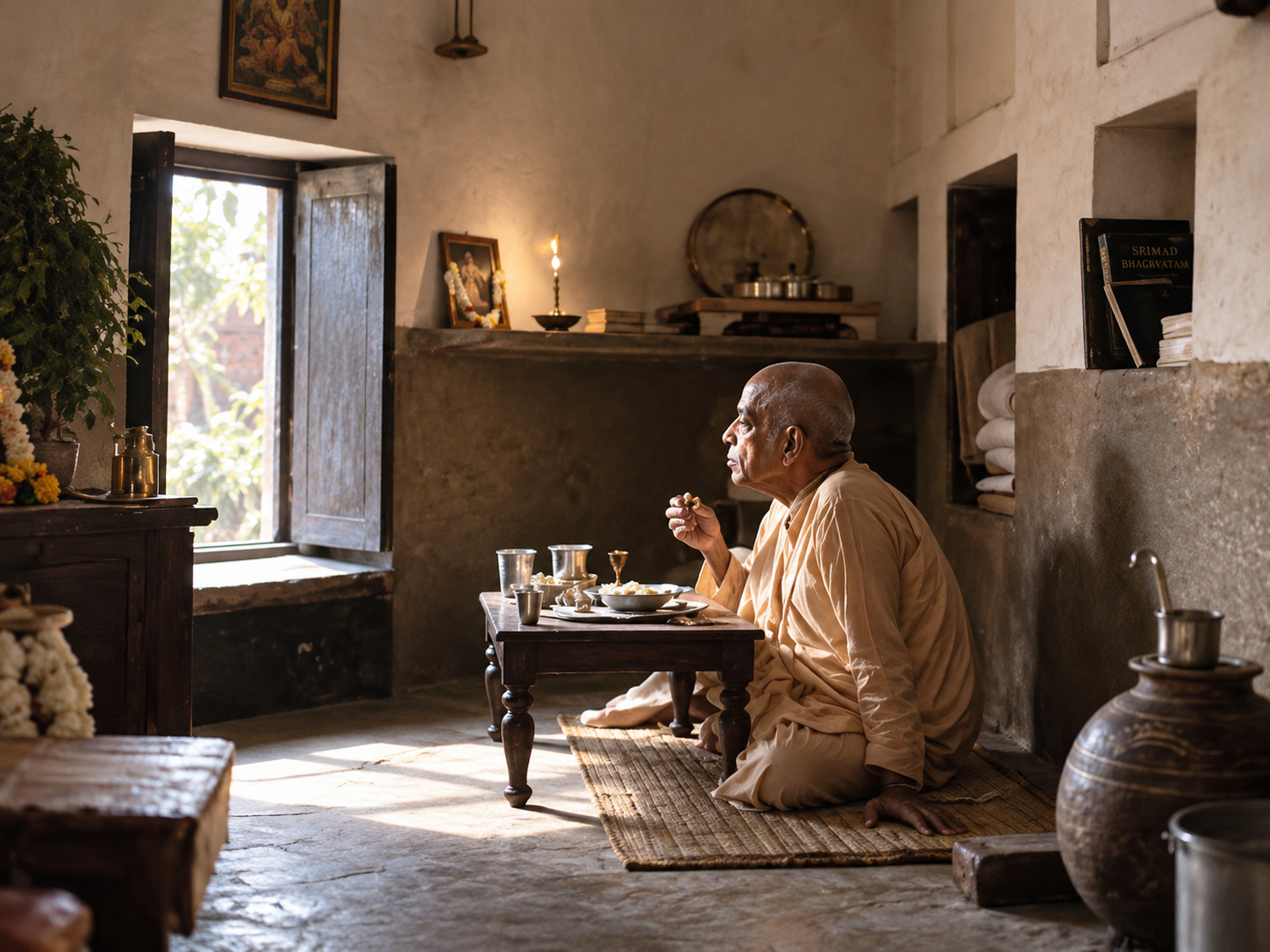
He later lived in the sacred town of Vṛndāvana, where he devoted himself deeply to study, translation and writing. In 1959 he accepted the renounced order of life, sannyāsa.
During this period he began his monumental English translation and commentary on the Śrīmad-Bhāgavatam. But one instruction still remained before him: the message had to reach the Western world.
The Journey
of the Jaladuta
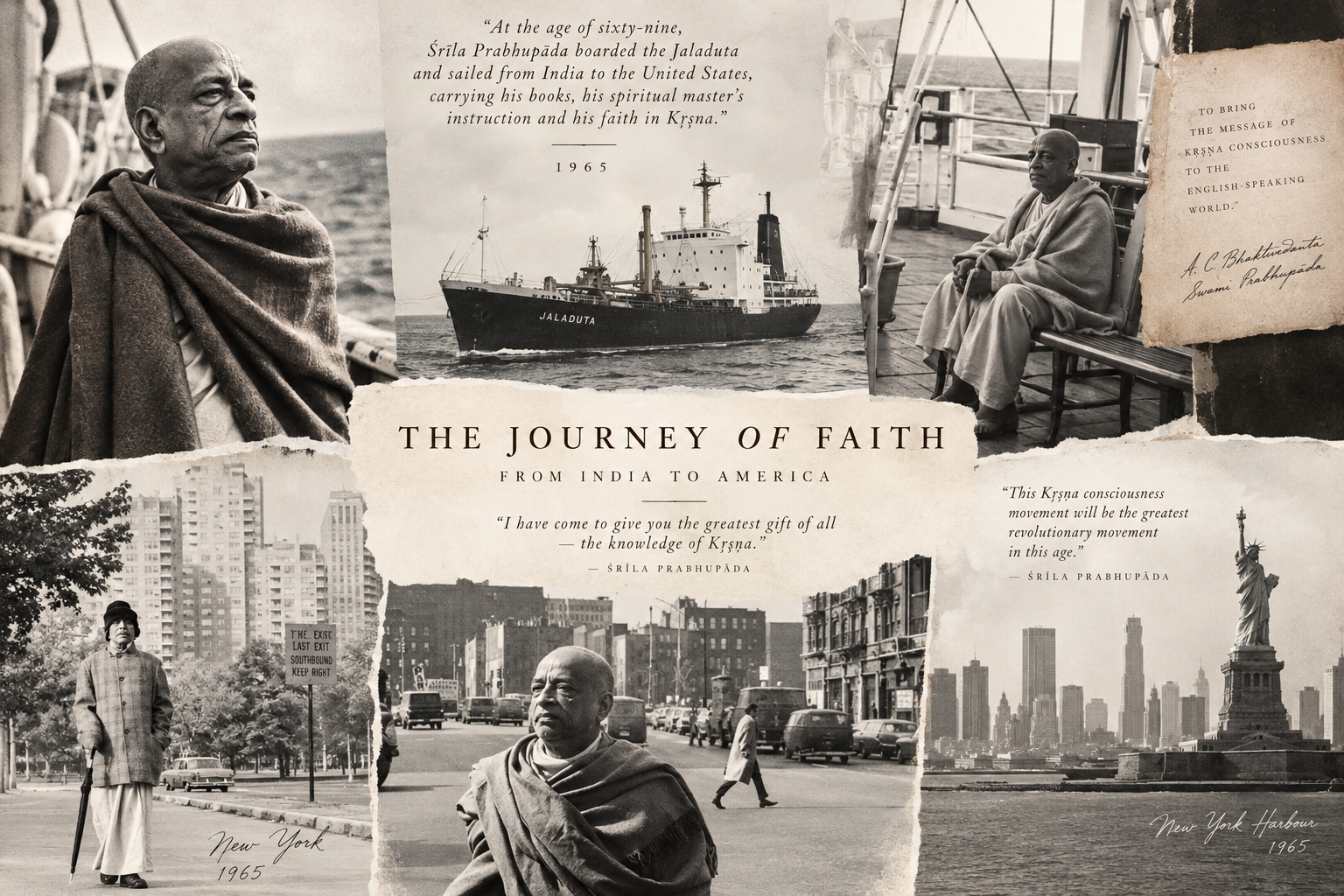
In 1965, at the age of sixty-nine, Śrīla Prabhupāda boarded the cargo ship Jaladuta and sailed from India to the United States.
He arrived in New York with no established temple, no large institution and no community waiting for him. He carried his books, the instruction of his spiritual master and an unwavering conviction in the teachings of Kṛṣṇa.
He began speaking wherever people were willing to listen—teaching Bhagavad-gītā, discussing spiritual philosophy and introducing the chanting of the holy names of Kṛṣṇa.
From Calcutta
to the World
A Practical Path
of Kṛṣṇa Consciousness
Śrīla Prabhupāda presented profound spiritual philosophy in direct and practical language. Spiritual life was not merely something to believe; it was something to live.
We Are Not the Body
The living being is an eternal spiritual soul, temporarily situated within a material body.
Kṛṣṇa Is the Supreme Person
At the centre of spiritual reality is Śrī Kṛṣṇa, the Supreme Personality of Godhead and the source of all existence.
The Path of Bhakti
The soul's natural relationship with Kṛṣṇa awakens through loving devotional service.
Chant the Holy Name
Hearing and chanting the names of Kṛṣṇa purify consciousness and awaken remembrance of God.
Study Sacred Wisdom
Bhagavad-gītā and Śrīmad-Bhāgavatam illuminate the nature of the soul, God, karma and the purpose of human life.
Make Life an Offering
Work, food, relationships and talents can all become spiritual when they are offered in devotion to Kṛṣṇa.
Hare Kṛṣṇa Hare Kṛṣṇa
Kṛṣṇa Kṛṣṇa Hare Hare
Hare Rāma Hare Rāma
Rāma Rāma Hare Hare
His Books
Perhaps no part of Śrīla Prabhupāda's mission was more important to him than his books. Through translations and extensive commentaries he opened some of the central scriptures of the Vaiṣṇava tradition to readers throughout the world.
These works were not intended merely as books about Indian philosophy. They were presented as practical guides to self-realisation and devotion.
More Than a Historical Founder
Śrīla Prabhupāda is known as the Founder-Ācārya of the International Society for Krishna Consciousness. An ācārya teaches spiritual truth not only through words but through his own conduct and example.
He gave the Hare Krishna movement its philosophical foundation, translated its principal scriptures for an international audience, established its spiritual practices and created the framework through which those teachings could continue.
His position is therefore not merely historical. His books, recorded lectures, conversations, letters and instructions remain at the heart of the spiritual life of the movement.
A Tradition Received and Passed Forward
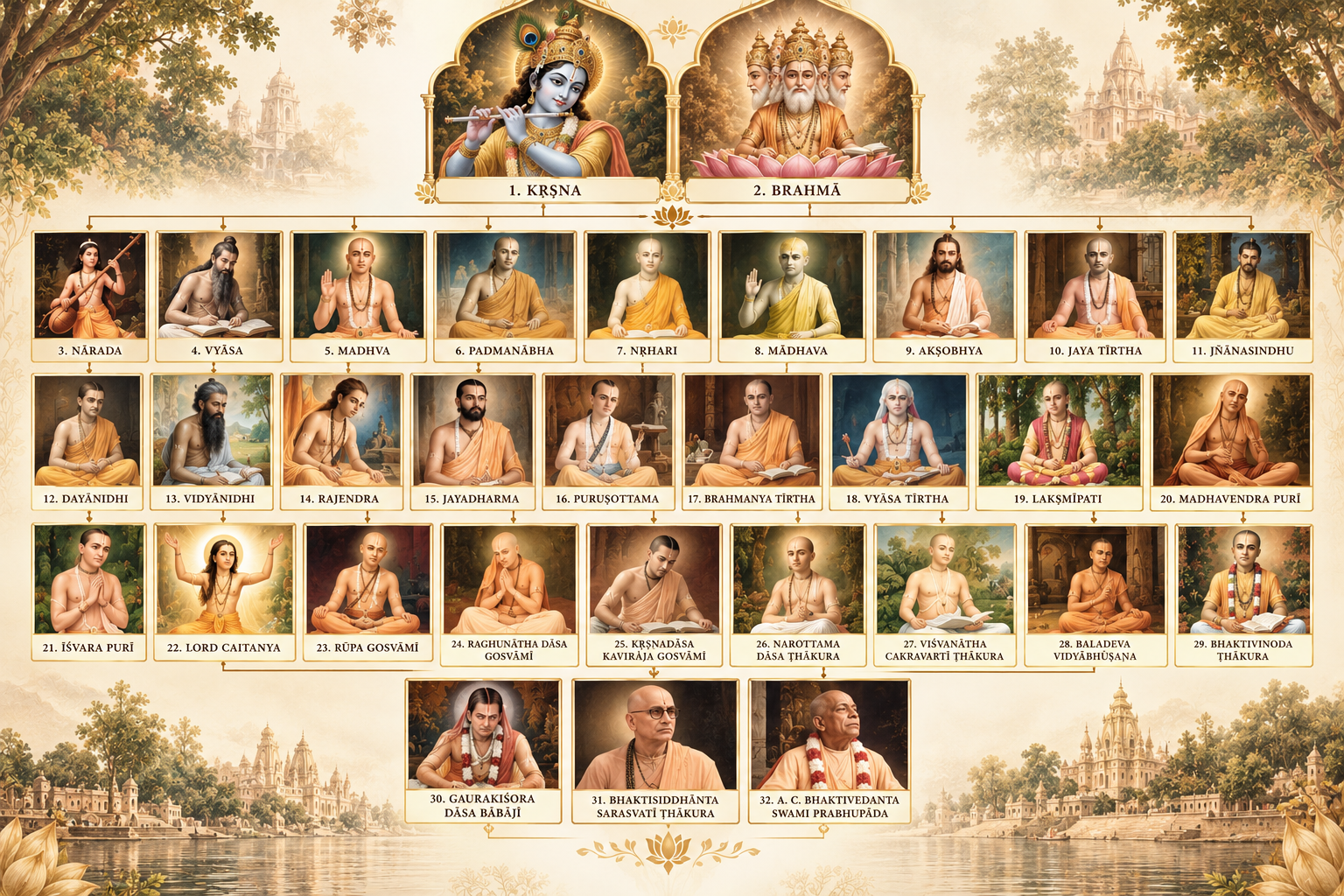
Śrīla Prabhupāda never presented himself as the inventor of a new philosophy. He understood himself as a servant within a disciplic succession—guru-paramparā. His spiritual master was Śrīla Bhaktisiddhānta Sarasvatī Ṭhākura, and the Gauḍīya Vaiṣṇava lineage in which he taught traces itself through the great teachers of the tradition to Śrī Caitanya Mahāprabhu.
Spiritual knowledge, in this understanding, is not manufactured. It is received, realised, lived and faithfully transmitted.
A Legacy That
Continues to Live
Śrīla Prabhupāda spent his final days in the sacred land of Vṛndāvana and passed away on 14 November 1977.
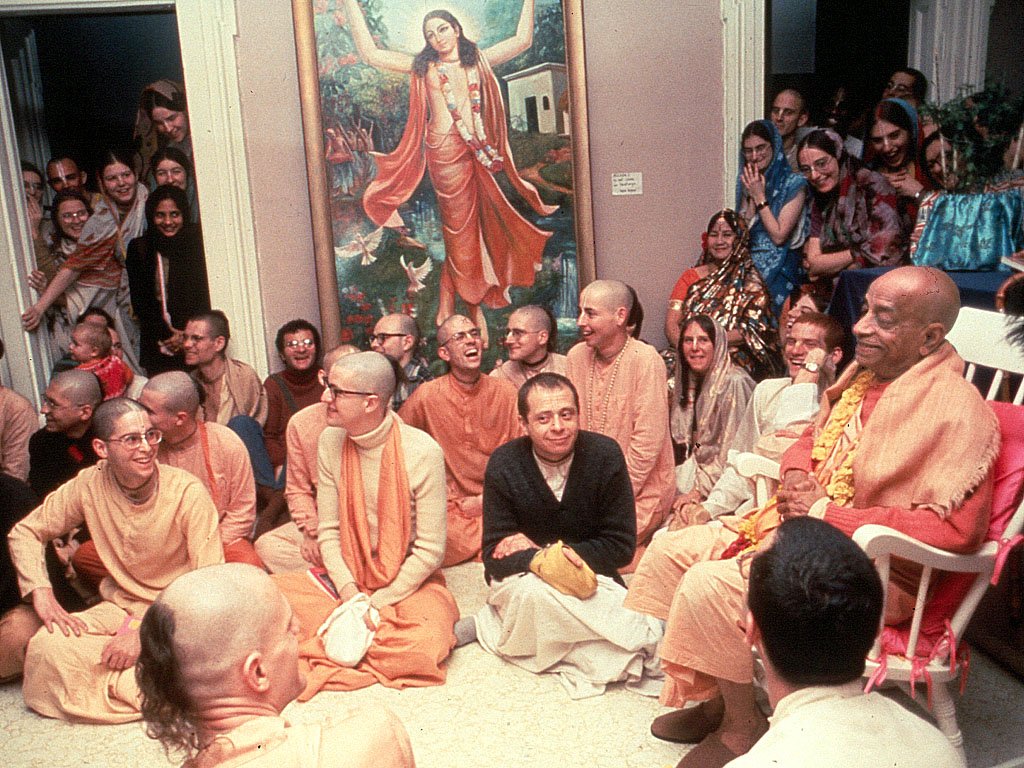
Yet his influence did not end there. His voice remains preserved in recorded lectures and conversations. His instructions remain in his letters. His teachings remain in his books.
Kīrtana continues. Bhagavad-gītā continues to be studied. Prasādam continues to be distributed. Temples continue their worship, and people who never met Śrīla Prabhupāda personally continue to encounter him through his teachings.
A journey that began with one elderly Vaiṣṇava crossing an ocean with his books became a spiritual tradition encountered by people throughout the world.
Discover the Timeless
Path of Bhakti
At the heart of Śrīla Prabhupāda's mission was a simple invitation: hear about Kṛṣṇa, read Bhagavad-gītā, chant the holy names, associate with devotees and gradually discover the eternal spiritual identity beyond the temporary body.